
Choosing the right CRM can make or break how you manage your sales and relationships. If you’re torn between Pipedrive and Attio, you’re not alone.
Both offer powerful tools, but they serve different needs—and knowing which fits your unique workflow can save you time, effort, and money. Are you looking for a simple way to visualize your sales pipeline and close deals faster? Or do you need a flexible platform that adapts to complex relationships and lets you customize data your way?
Keep reading to discover how Pipedrive and Attio stack up, so you can pick the CRM that truly works for you and your team.
Credit: zixflow.com
Pipedrive Features
Choosing the right CRM depends on your specific needs. Pipedrive and Attio serve different purposes. Comparing their use cases helps identify which fits best. Here is a detailed look at their strengths.
Sales Pipeline Focus
Pipedrive is built around managing sales pipelines. It offers a clear visual layout of deals and stages. Sales teams can track progress easily and move deals forward. Automation features simplify repetitive tasks. Pipedrive suits businesses focused on closing deals quickly.
Attio, on the other hand, is less centered on pipelines. It supports broader data management beyond just sales stages. This makes it less ideal for teams needing strict pipeline control. Attio focuses more on tracking relationships and data connections.
Relationship Management
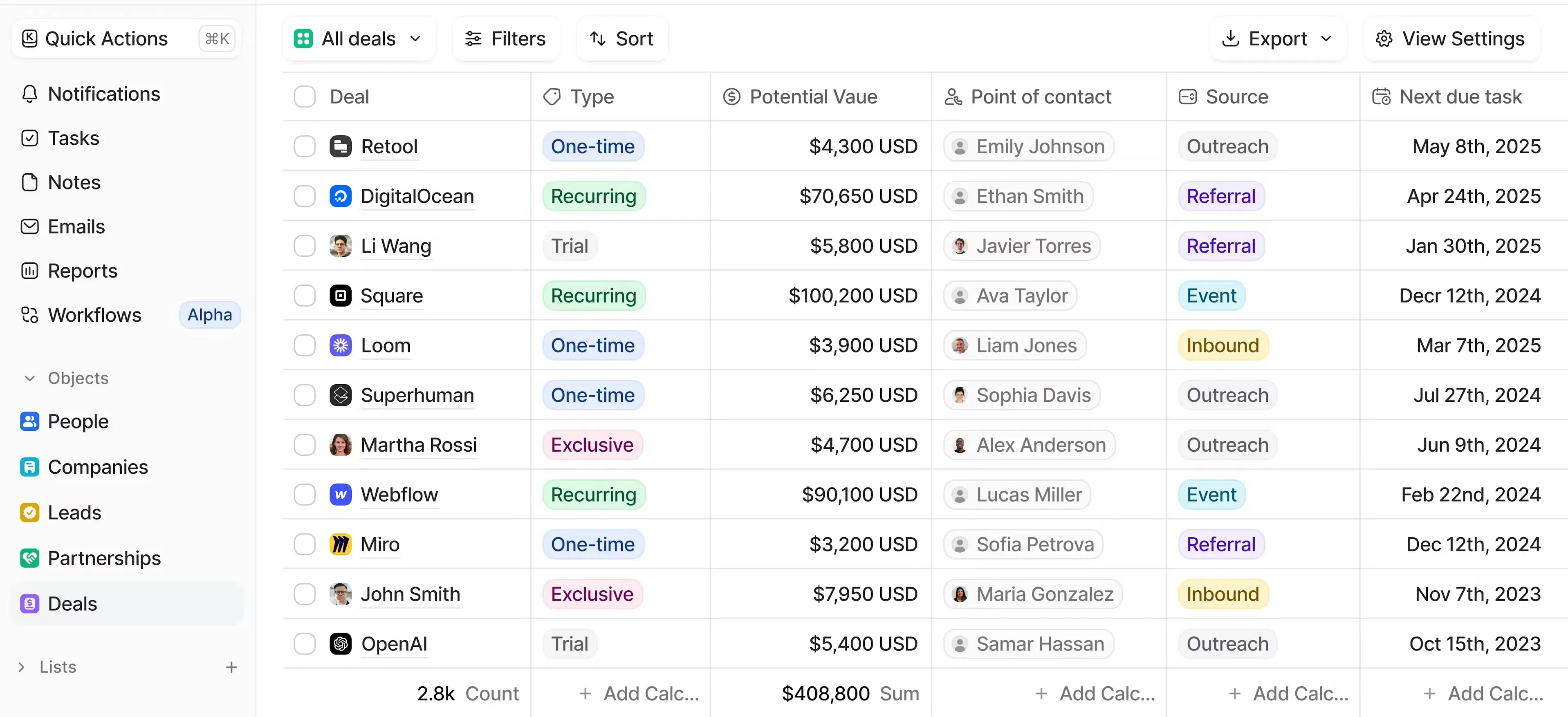
Attio excels in managing complex relationships. It allows teams to store rich contact data and link different records. This helps in understanding client history and interactions deeply. Attio supports collaboration across teams working on partnerships or customer success.
Pipedrive provides basic contact management but lacks advanced relationship mapping. It works well for sales reps needing simple contact info and deal tracking. For businesses wanting detailed relationship insights, Attio is a stronger choice.
Customization Needs
Attio offers flexible customization options. Users can create custom data models and views. This adapts well to varied workflows beyond sales. Its modern interface supports tailored setups for different teams.
Pipedrive has preset pipeline stages and limited customization. It is ready to use out of the box. This benefits teams wanting quick setup without complex changes. However, it may restrict businesses with unique processes.

Credit: www.relay.app
Attio Features
Pricing and value play a big role when choosing between Pipedrive and Attio. Each offers different plans and features that suit various business needs. Understanding their cost structure helps find the best fit for your budget and goals.
Both CRMs provide tiered pricing models. This lets businesses pick plans that match their size and requirements. The value depends on the features included and how they support your workflow.
Cost Comparison
Pipedrive’s pricing starts lower, making it accessible for small teams. Its basic plan covers essential sales pipeline tools. Higher tiers add more automation and integrations.
Attio’s plans begin at a slightly higher price point. It focuses on flexible data handling and AI features. The cost reflects its advanced customization options.
Feature Tiers
Pipedrive offers four main plans. Each increases in automation, reporting, and user seats. The top tier suits growing sales teams needing robust tools.
Attio has fewer tiers but packs more features into each. Its plans emphasize collaboration, relationship insights, and AI enhancements. This suits teams needing deep data management.
Scalability
Pipedrive scales well for traditional sales teams expanding their pipelines. Adding users and features is simple as needs grow.
Attio scales by allowing users to customize data models and workflows. It fits teams with complex relationship management demands.
Choosing depends on your growth plans and CRM flexibility needs.

Credit: www.folk.app
Frequently Asked Questions
What Are The Main Differences Between Pipedrive And Attio?
Pipedrive focuses on visual sales pipelines and automation for traditional sales teams. Attio offers flexible relationship management, AI-driven data enrichment, and deep customization for varied use cases like sales and partnerships.
Which Crm Is Better For Sales Pipeline Management?
Pipedrive is better for sales pipeline management with its visual Kanban pipelines and robust sales automation. It simplifies tracking deals and activities for sales-focused teams.
Can Attio Handle Complex Relationship Mapping Effectively?
Yes, Attio excels in complex relationship mapping with its data-model-first approach. It provides powerful data handling and a modern interface ideal for collaboration and customization.
Is Pipedrive Suitable For Non-sales Use Cases?
Pipedrive is less flexible for non-sales scenarios. It’s designed mainly for straightforward sales processes and may become complex or costly when extended beyond core sales functions.
Conclusion
Choosing between Pipedrive and Attio depends on your team’s needs. Pipedrive suits teams wanting clear sales pipelines and automation. Attio fits those needing flexible relationship management and data customization. Both tools offer strong features but serve different workflows. Consider how your team works daily and what features matter most.
This way, you pick a CRM that helps your business run smoothly and grow steadily.