Are you tired of juggling multiple tools to manage your sales and Shopify store? Imagine having a seamless connection that brings your customer data and sales process together effortlessly.
That’s exactly what the Close CRM Shopify Integration offers. By linking Close CRM with your Shopify store, you get clear, real-time insights into your leads and customers—all in one place. This means no more missed opportunities or wasted time switching between apps. You can move faster, close deals smarter, and keep your sales pipeline flowing smoothly. Ready to supercharge your sales workflow? Discover how the Close CRM Shopify Integration can transform your business and help you close deals before they go cold. Keep reading to learn exactly how this powerful combo works and why it’s the game-changer your sales process needs.
Credit: sudiptokolit.wordpress.com
Introduction To Close Crm Shopify Integration
Integrating Close CRM with Shopify creates a seamless connection between sales and customer data. This integration helps businesses manage leads, track sales, and improve customer relationships without switching platforms. It simplifies tasks and speeds up workflows, making sales processes clearer and more effective.
Overview Of Close Crm And Shopify Platforms
Close CRM is a sales-focused platform designed to help teams manage leads and close deals faster. It offers tools for calling, emailing, and tracking sales activities in one place. Its main goal is to reduce lost leads and wasted time.
Shopify is a leading e-commerce platform for building online stores. It provides tools for product listings, payments, and order management. Shopify helps businesses sell products easily and handle customer purchases smoothly.
Purpose And Benefits Of Integrating Close Crm With Shopify
- Centralized Data: Sync customer and order information from Shopify to Close CRM.
- Improved Lead Management: Automatically capture new Shopify customers as leads in Close CRM.
- Faster Follow-ups: Sales teams receive instant updates to contact customers quickly.
- Better Sales Tracking: Track sales performance with combined data from both platforms.
- Time Savings: Reduce manual data entry and errors by automating workflows.
How Integration Streamlines Sales And Workflow
The integration automates data flow between Shopify and Close CRM. When a customer places an order, their details appear in Close CRM immediately. Sales teams can then act without delay.
Tasks like creating new contacts, updating order statuses, and logging communication happen automatically. This reduces repetitive work and keeps all teams on the same page.
| Step | Before Integration | After Integration |
|---|---|---|
| Lead Capture | Manual import from Shopify to CRM | Automatic syncing of new customers |
| Order Tracking | Separate systems, manual updates | Unified sales and order data in Close CRM |
| Follow-up Actions | Delayed contact due to lack of info | Instant notifications and task creation |
This smooth workflow helps sales teams close deals faster and keep customers happy.
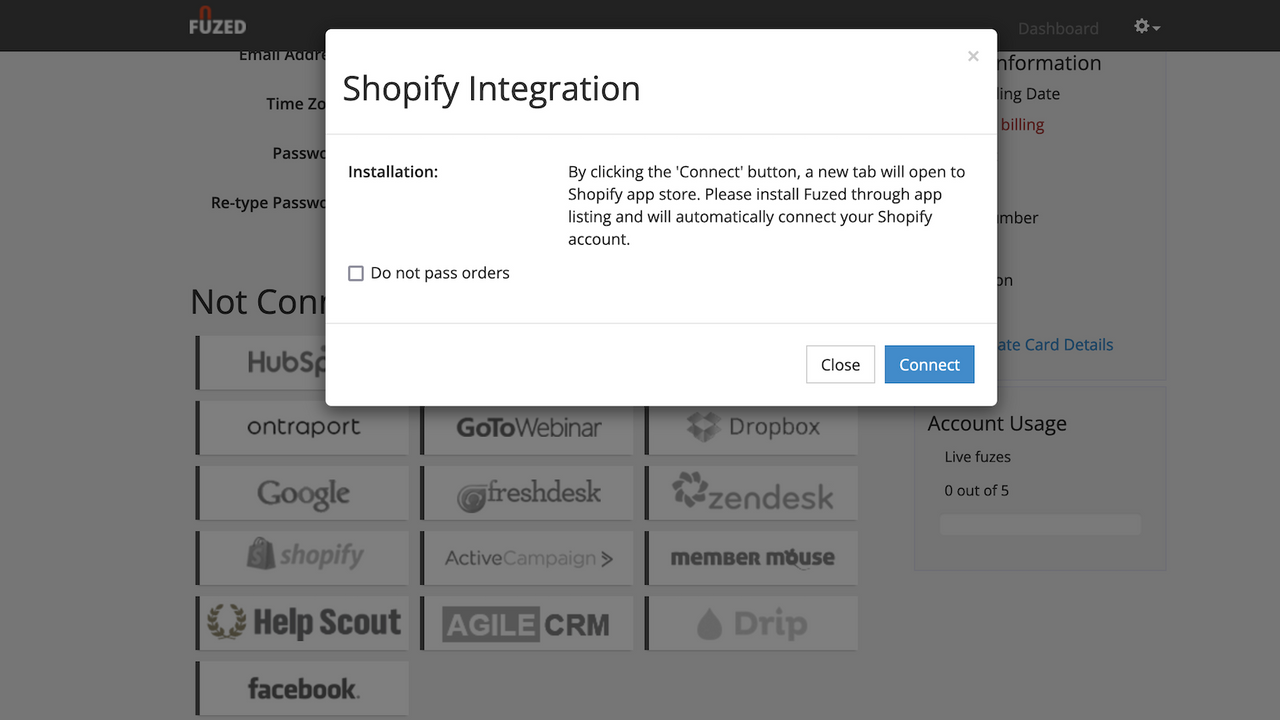
Credit: apps.shopify.com
Key Features Of Close Crm Shopify Integration
Close CRM Shopify Integration combines the power of Shopify’s e-commerce platform with Close CRM’s sales management tools. This integration streamlines sales processes and data handling, helping businesses stay organized and efficient. It brings several key features that simplify customer and order management, making sales faster and more accurate.
Automated Data Sync: Keeping Customer And Order Data Unified
The integration automatically syncs customer and order data between Shopify and Close CRM. This means no manual data entry is needed, reducing errors and saving time.
- Customer details from Shopify are updated in Close CRM instantly.
- Order information flows directly into your sales pipeline.
- Unified data view helps teams stay informed and responsive.
This real-time sync ensures your sales and support teams always work with the latest information.
Centralized Sales Pipeline Management Across Platforms
Manage all sales activities in one place by integrating Shopify orders directly into Close CRM’s pipeline. This feature lets you:
- Track leads and customers from the first visit to purchase.
- Visualize your sales funnel with live data from Shopify.
- Prioritize deals based on order status and customer behavior.
Centralized management improves workflow and decision-making across sales and marketing teams.
Real-time Lead Tracking And Follow-up Automation
Close CRM tracks Shopify visitors and converts them into leads automatically. Follow-ups are triggered without delay to keep prospects engaged.
- Leads appear instantly in Close CRM after site interaction.
- Automated reminders alert sales reps to contact leads.
- Follow-up sequences can be customized for different customer types.
This system boosts conversion rates by ensuring timely responses to potential buyers.
Customizable Workflow Automation To Save Time
Businesses can create workflows that automate repetitive tasks. These automations include:
- Sending personalized emails based on customer actions.
- Updating deal statuses as orders progress.
- Assigning leads to sales reps automatically.
Custom workflows reduce manual work, letting teams focus on closing deals.
Seamless Communication Tracking For Enhanced Customer Insights
All communication with customers, including calls, emails, and notes, is tracked and logged in Close CRM. This feature offers:
| Communication Type | Benefit |
|---|---|
| Calls | Record and review sales conversations. |
| Emails | Track email opens and responses automatically. |
| Notes | Keep detailed customer interaction histories. |
This complete communication history gives sales teams deep insights to tailor their approach and increase customer satisfaction.
Pricing And Affordability Breakdown
Understanding the costs involved with Close CRM and Shopify integration helps in better budget planning. This section breaks down the pricing of Close CRM, Shopify, and related tools. It also compares the value of streamlined sales processes against these costs. Small businesses will find options suited to limited budgets.
Close Crm Pricing Plans And What They Include
| Plan | Monthly Cost (per user) | Main Features |
|---|---|---|
| Basic | $29 |
|
| Professional | $69 |
|
| Enterprise | Custom pricing |
|
Costs Associated With Shopify And Integration Tools
Shopify pricing starts at $29/month for the Basic plan. This includes:
- Online store setup
- Payment processing
- Customer management
Higher plans add features like professional reports and shipping discounts.
Integration tools such as Zapier help connect Close CRM and Shopify. Zapier offers:
- Free plan with limited tasks
- Paid plans starting at $19.99/month for more automation
These costs vary depending on usage and business size.
Comparing Value: Roi From Streamlined Sales Vs. Cost
Close CRM’s automation reduces time spent on manual tasks.
Faster lead follow-up leads to higher sales conversion.
Integrating Shopify sales data into Close CRM improves customer insights.
This integration helps avoid lost leads and missed opportunities.
Overall, the increased revenue often outweighs monthly expenses.
Free Trials And Budget-friendly Options For Small Businesses
Close CRM offers a 14-day free trial with full features.
Shopify provides a 3-day free trial for new users.
Zapier’s free plan supports basic integration with limited tasks.
Small businesses can test these tools without upfront costs.
Starting with lower-tier plans helps control monthly spending.
Scalable pricing allows growth without sudden cost spikes.
Pros And Cons Based On Real-world Usage
Integrating Close CRM with Shopify offers valuable benefits for sales teams. Users gain better control over customer data and sales processes. Yet, some challenges arise during initial setup and learning. Exploring real-world experiences helps understand what to expect.
Advantages: Increased Sales Efficiency And Improved Data Accuracy
Close CRM Shopify integration enhances sales efficiency by unifying customer and order data. Sales teams track leads and automate follow-ups directly from Shopify sales records.
- Faster lead response: Automated syncing reduces manual data entry.
- Accurate customer info: Eliminates errors from duplicate or missing data.
- Streamlined workflow: Sales and marketing teams work from a single platform.
This integration supports better decision-making by providing up-to-date sales insights.
Challenges: Initial Setup Complexity And Learning Curve
The setup process involves multiple steps, including API connections and workflow configuration. This complexity can delay immediate benefits.
- Connecting Shopify and Close CRM requires technical knowledge.
- Mapping data fields correctly is critical to avoid sync errors.
- Users must learn how to manage automated workflows.
New users may spend several days adjusting to the system before full productivity.
User Feedback And Performance Insights
| Aspect | User Experience | Performance |
|---|---|---|
| Sales Tracking | Positive – Easier lead follow-up and pipeline visibility | Reliable syncing with minimal delays |
| Data Accuracy | Improved – Fewer manual errors reported | High consistency between Shopify and CRM data |
| Setup Process | Mixed – Some users found it complex | Requires patience and technical support |
Support And Resources Available For Troubleshooting
Close CRM provides several support options to assist users:
- Detailed documentation: Step-by-step guides for integration setup.
- Customer support: Responsive help via email and chat.
- Community forums: User discussions to share tips and solutions.
- Zapier integration: Enables no-code automation for easier workflow management.
These resources reduce downtime and help users resolve issues quickly.
Recommendations For Ideal Users And Scenarios
Close CRM Shopify integration suits businesses wanting a smooth sales process. It helps teams manage leads efficiently and close deals faster. This integration fits well with specific business types and use cases. Below are clear recommendations to guide the right users.
Best Suited Business Types And Sizes For Close-shopify Integration
This integration works best for small to medium e-commerce stores. These businesses often need tools to handle many leads and sales quickly. Close CRM’s focus on sales clarity helps these companies avoid lost opportunities.
Ideal users include:
- Online shops with growing customer bases
- Retailers needing better follow-up on Shopify leads
- Businesses with small sales teams wanting to improve productivity
Use Cases: E-commerce Stores Aiming To Boost Sales Productivity
E-commerce stores benefit most from this integration by automating lead capture and follow-ups. It helps sales reps spend less time on manual entry and more on closing deals. Common use cases include:
- Tracking customer interactions directly from Shopify orders
- Automating email sequences to nurture leads
- Centralizing communication in one platform for faster responses
When To Consider This Integration Over Other Crm Solutions
Choose Close-Shopify integration if fast sales cycles matter most. It suits teams that want clear pipelines and easy lead tracking. Consider this if:
- You need a CRM focused on sales calls and email outreach.
- Manual lead management slows your team down.
- Your Shopify store requires synced customer data without complex setups.
Tips For Maximizing Benefits Post-integration
Get the most from Close CRM and Shopify with these tips:
- Set up automated workflows to reduce repetitive tasks.
- Train your sales team on using Close’s calling and email features.
- Use detailed reports to spot sales trends and improve strategies.
- Regularly update customer data to keep communications relevant.
Following these steps helps maintain a smooth sales process and increases closing rates.
Credit: amasty.com
Frequently Asked Questions
Is Close Crm Good For Small Businesses?
Close CRM suits small businesses needing fast, data-driven sales management. It offers powerful automation and clear communication tools. Its user-friendly design boosts sales productivity without complexity. Integration with apps like Shopify enhances efficiency. Close CRM helps small teams close deals faster and manage pipelines effectively.
How Much Does Close Crm Cost?
Close CRM pricing starts at $29 per user/month for Solo, with Essentials, Growth, and Scale plans offering advanced features and higher rates.
How Does Close Crm Compare To Salesforce?
Close CRM targets inside sales with a call-focused, user-friendly platform. Salesforce suits large, complex businesses with extensive customization. Close offers speed and simplicity for smaller teams, while Salesforce provides broader features for enterprise needs. Both improve sales productivity but serve different business sizes and complexities.
What Is Close Crm Used For?
Close CRM helps sales teams manage leads, track communications, and automate workflows to close deals faster and boost productivity.
Conclusion
Integrating Close CRM with Shopify simplifies managing your customer data. It helps track leads and sales all in one place. This integration speeds up your sales process and reduces manual work. You stay organized and respond quickly to customers. For seamless connection, check out Close CRM Shopify Integration. This tool fits well for businesses aiming to improve sales without extra hassle. Try it and see how it supports your daily workflow. Simple, clear, and effective.