Choosing the right CRM can make or break how you manage your customer relationships and grow your business. If you’re torn between Nutshell and HubSpot, you’re not alone.
Both offer powerful tools, but they serve different needs and styles. What if you could quickly see which one fits your business goals, budget, and workflow? You’ll discover a clear, side-by-side comparison of Nutshell vs HubSpot—helping you make a confident decision that saves time and boosts your sales.
Keep reading to find out which CRM will unlock your business’s true potential.
Credit: www.method.me
Crm Market Landscape In 2025
The CRM market landscape in 2025 shows rapid evolution. Businesses demand smarter tools to manage customer relationships. CRM platforms now focus on automation, integration, and ease of use. Both small companies and large enterprises seek flexible solutions. This creates fierce competition among CRM providers. Understanding current trends and key players helps in making wise choices.
Growth Trends
The CRM market is growing steadily each year. Cloud-based CRM systems dominate due to easy access and scalability. AI-powered features improve customer data analysis and personalization. Mobile CRM use rises as remote work expands globally. Integration with other business tools becomes a must-have. Companies invest more in CRM to boost sales and customer retention.
Key Players Overview
HubSpot leads with a strong focus on marketing and sales automation. It offers a user-friendly interface and extensive integrations. Nutshell stands out by providing a highly customizable platform. It suits small to mid-sized businesses needing tailored workflows. Other major players include Salesforce, Zoho, and Microsoft Dynamics. Each provider targets different business needs and budgets.
Nutshell Crm Features
Nutshell CRM offers a suite of features designed to simplify sales and customer management. It focuses on easy navigation and powerful tools for small to medium businesses. Users can track leads, manage contacts, and automate repetitive tasks. The system also allows adjustments to match unique business needs. Pricing is straightforward, making it accessible for growing teams.
User Interface And Design
Nutshell’s interface is clean and intuitive. It presents information clearly, reducing learning time. The dashboard highlights key sales data for quick decisions. Navigation menus are simple and logical. Visual elements help users stay organized and focused. The design supports both desktop and mobile use well.
Customization Options
Nutshell allows users to tailor fields and layouts. Custom pipelines match specific sales processes easily. Users can add tags and notes to contacts for better tracking. Reports can be customized to show relevant metrics. This flexibility helps businesses work the way they want. It adapts to different industries and workflows.
Automation Capabilities
Automation in Nutshell reduces manual work effectively. It can send follow-up emails based on triggers. Tasks and reminders are created automatically for sales reps. Workflows streamline common processes like lead assignment. This saves time and helps maintain consistent communication. Automation supports better team collaboration and productivity.
Pricing Structure
Nutshell offers clear pricing plans with no hidden fees. Subscription costs are based on the number of users. Each plan includes core CRM features and support. Additional features may be available in higher tiers. The pricing is competitive for small and medium businesses. It provides good value without complex contracts.
Hubspot Crm Features
HubSpot CRM offers a wide range of features designed to help businesses manage their customer relationships effectively. It focuses on ease of use and automation, making sales processes smoother. The platform suits companies of all sizes by providing tools that simplify tasks and improve productivity.
Pipeline Automation
HubSpot CRM automates sales pipelines to save time and reduce errors. It tracks deals, assigns tasks, and sends reminders automatically. Users can visualize their sales stages clearly and move deals forward with minimal manual work. This feature keeps the sales team organized and focused on closing deals faster.
All-in-one Platform Benefits
HubSpot combines marketing, sales, and service tools in one platform. It allows teams to work together without switching software. Users can manage contacts, send emails, and track customer interactions in one place. This integration helps improve communication and provides a complete view of customer data.
Integration Ecosystem
HubSpot supports many third-party integrations to extend its functionality. It connects easily with email providers, social media, and other business tools. This flexibility helps businesses customize their CRM to fit specific needs. Integrations simplify data sharing and automate workflows across different platforms.
Pricing And Plans
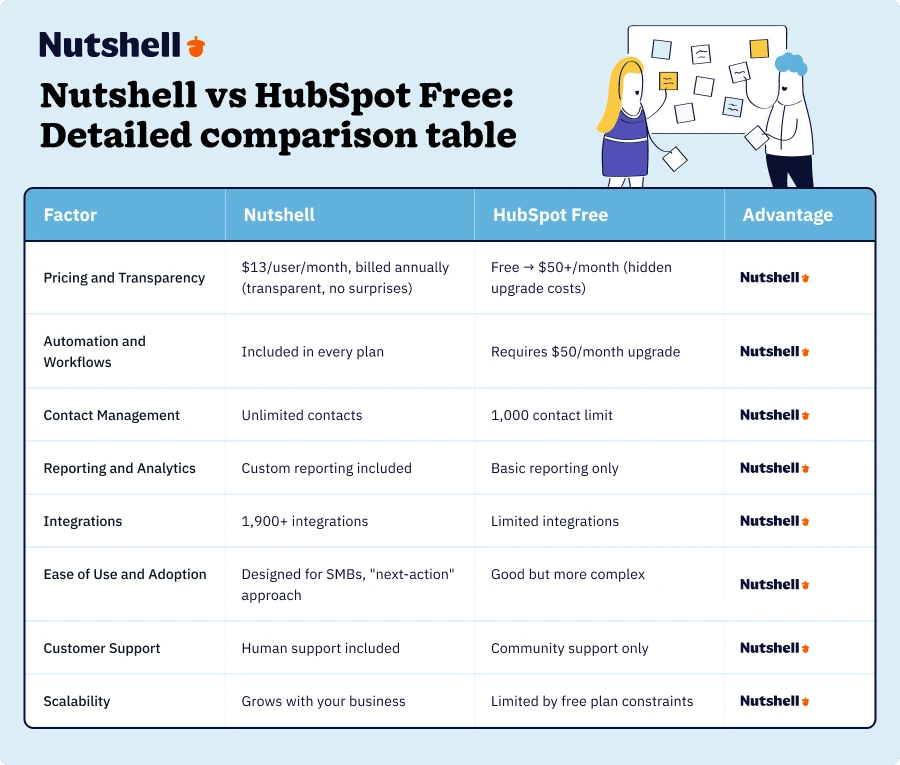
HubSpot CRM offers a free plan with basic features suitable for small teams. Paid plans provide advanced tools and more customization options. Pricing scales with the number of users and added features. This structure allows businesses to start small and upgrade as they grow.
Credit: www.nutshell.com
Performance Comparison
Comparing the performance of Nutshell and HubSpot reveals important differences. Each platform offers unique strengths that affect daily use and business outcomes. This section breaks down key areas where these CRM tools perform differently.
Ease Of Use
Nutshell provides a clean and simple interface. Users can quickly learn to navigate its features. HubSpot has a more complex layout but offers guided help and tutorials. Beginners may find Nutshell easier to start with. HubSpot’s design suits users who want more detailed control.
Customization Flexibility
Nutshell allows users to tailor pipelines, fields, and reports. It supports custom workflows and layouts with relative ease. HubSpot offers broader customization options, including custom objects and integrations. Businesses needing deep customization might prefer HubSpot. Nutshell focuses on straightforward adjustments.
Automation Efficiency
HubSpot excels in automation with strong workflow tools. It automates email sequences, task assignments, and lead scoring smoothly. Nutshell also provides automation but on a smaller scale. Its rules and triggers cover common sales tasks well. HubSpot suits teams requiring complex, multi-step automation.
Reporting And Analytics
HubSpot delivers extensive analytics with customizable dashboards. It tracks sales, marketing, and customer service metrics in detail. Nutshell offers solid reporting features with easy-to-understand visuals. Its reports focus on pipeline health and team performance. HubSpot is better for data-driven businesses needing advanced insights.
Customer Support And Community
Customer support and community play a crucial role in choosing the right CRM. They ensure users get help when needed. A strong community also helps users share tips and solutions. Nutshell and HubSpot both offer support and community features. Their differences can impact your experience and success with the platform.
Support Channels
Nutshell provides email support and live chat during business hours. Phone support is available for premium plans. HubSpot offers 24/7 support via phone, email, and live chat. HubSpot’s extensive support covers more time zones. Nutshell focuses on quick responses during specific hours.
User Community And Resources
HubSpot has a large user community with active forums. It offers webinars, blogs, and an extensive knowledge base. Nutshell has a smaller but helpful user community. It provides tutorials, guides, and a help center. HubSpot’s resources suit beginners and advanced users. Nutshell’s community is more intimate and focused.
Training And Onboarding
HubSpot provides comprehensive onboarding with personalized training sessions. It has free online courses through HubSpot Academy. Nutshell offers guided onboarding and product tours. It focuses on easy setup and quick learning. HubSpot’s training is more detailed and varied. Nutshell ensures users start fast without overwhelm.
Use Case Suitability
Choosing the right CRM depends on how well it fits your specific needs. Use case suitability helps identify which CRM matches your business size, industry, and goals. Nutshell and HubSpot each offer unique strengths. Understanding their best applications can guide your decision.
Small Business Needs
Nutshell provides an easy-to-use platform perfect for small teams. Its simple setup saves time and reduces learning curves. HubSpot offers free tools that help startups track leads and manage contacts. Both tools support email integration and basic automation. Nutshell suits businesses wanting quick customization. HubSpot fits those needing scalable marketing features.
Enterprise Applications
HubSpot excels in handling large data and complex workflows. It supports multiple departments with advanced reporting and automation. Nutshell can manage growing sales pipelines but may lack deep enterprise features. HubSpot integrates well with other enterprise software. It also offers extensive customer support and training. Large companies benefit from HubSpot’s robust ecosystem and scalability.
Industry-specific Scenarios
Nutshell works well for industries valuing customization, like real estate or consulting. It allows tailored sales processes and reporting. HubSpot suits marketing-heavy industries such as tech and e-commerce. Its inbound marketing tools enhance customer engagement. Both CRMs serve diverse sectors but differ in specialized tools. Choose based on which features match your industry’s demands.
Pricing And Value Analysis
Understanding the pricing and value of Nutshell and HubSpot helps you make a smart choice. Both CRMs offer strong features but differ in cost structure and flexibility. This section breaks down their pricing, return on investment, and subscription options. It aims to simplify your decision process with clear facts.
Cost Comparison
Nutshell offers a straightforward pricing model with fewer tiers. Its plans start at a fixed monthly fee per user. HubSpot uses a freemium model with various paid tiers. The cost increases as you add more advanced features and users. Nutshell can be more affordable for small teams. HubSpot may cost more but includes a wider range of tools.
Return On Investment
Choosing a CRM is about value, not just price. Nutshell saves time with easy setup and customization. This can boost sales efficiency quickly. HubSpot provides extensive marketing and sales automation. It may increase revenue over time for growing businesses. Both offer free trials to test their benefits before buying. Calculate potential sales growth to estimate your return.
Subscription Flexibility
Nutshell’s subscription plans are simple and predictable. You pay monthly or annually with clear terms. HubSpot offers modular subscriptions, allowing you to mix and match features. You can upgrade or downgrade plans based on needs. Nutshell suits users wanting straightforward billing. HubSpot fits those needing scalable solutions that grow with their business.
User Feedback And Reviews
User feedback and reviews play a vital role in choosing between Nutshell and HubSpot. They offer real insights into how each CRM performs in daily business tasks. Users share their experiences about ease of use, features, support, and overall satisfaction. This section breaks down the key points from user reviews to help you understand what users value and what they find challenging in each platform.
Positive Highlights
Many users praise Nutshell for its simple and clear interface. Customization options receive high marks, allowing businesses to tailor the system to their needs. HubSpot stands out for its automation and integration capabilities. Users enjoy how easily it connects with other tools. Both CRMs get credit for improving sales tracking and pipeline management.
Common Criticisms
Some users find Nutshell’s reporting features limited compared to competitors. A few mention occasional glitches and slow customer support response. HubSpot users sometimes feel overwhelmed by its many features, which can be complex for beginners. Pricing is a concern, as some say it becomes costly as the business grows. Both platforms face feedback on occasional bugs and learning curves.
User Satisfaction Scores
Review sites show HubSpot generally scores higher in overall satisfaction. Its wide range of features and strong support boost user ratings. Nutshell has solid scores for ease of use and customization but ranks slightly lower in support and advanced reporting. Both CRMs maintain good reputations, with happy users praising their core strengths. Scores reflect the balance between features, cost, and user experience.
Final Considerations
Final considerations help clarify the best CRM choice. Choosing the right tool affects business efficiency and growth. Focus on how each platform aligns with your needs. Think about current requirements and future plans. This approach ensures a smarter investment and smoother adoption.
Choosing Based On Business Goals
Identify your main business objectives first. Nutshell suits teams needing easy customization and detailed pipeline views. HubSpot fits businesses wanting automation and marketing integration. Consider sales process complexity and customer interaction style. Choose the CRM that supports your specific goals clearly. This match improves user adoption and overall results.
Scalability And Future-proofing
Plan for growth beyond immediate needs. HubSpot offers many add-ons and advanced features as your business grows. Nutshell provides flexibility but with some limits on scaling large teams. Check how each platform handles more users and data. Also, consider ongoing updates and support availability. A scalable CRM saves costs and stress later on.

Credit: www.webfx.com
Frequently Asked Questions
What Are The Main Differences Between Nutshell And Hubspot?
Nutshell offers advanced customization and a user-friendly interface. HubSpot excels in automation and seamless pipeline management. Both serve different business needs, with HubSpot being more comprehensive and Nutshell focusing on affordability and flexibility.
Which Crm Is More Affordable, Nutshell Or Hubspot?
Nutshell generally provides more budget-friendly pricing plans. HubSpot offers a free tier but can be pricier for advanced features. Pricing depends on your business size and feature needs, so evaluate both carefully before choosing.
How Do Nutshell And Hubspot Handle Automation?
HubSpot leads with robust, automated workflows and marketing tools. Nutshell offers customizable automation tailored to sales processes. Both improve efficiency, but HubSpot’s automation is more extensive for inbound marketing and sales.
Which Crm Suits Small Businesses Better, Nutshell Or Hubspot?
Nutshell is ideal for small to mid-sized businesses seeking simplicity and affordability. HubSpot suits small businesses wanting an all-in-one marketing and sales platform. Choose based on your need for marketing automation versus customization.
Conclusion
Choosing between Nutshell and HubSpot depends on your business needs. Nutshell offers strong customization and user-friendly features. HubSpot provides seamless automation and a wide range of tools. Both platforms help manage customer relationships effectively. Consider your budget, team size, and specific goals.
Test each CRM to see which fits your workflow best. Clear priorities lead to better CRM decisions. Both Nutshell and HubSpot have unique strengths worth exploring. The right choice supports growth and smooth sales processes.