
Are you trying to decide between Shopify and HubSpot for your business? Choosing the right platform can feel overwhelming, especially when both promise to boost your sales and streamline your operations.
But here’s the thing: Shopify and HubSpot serve very different purposes, and knowing which one fits your needs can save you time, money, and headaches. If managing customer relationships smoothly and keeping all your data in one place sounds appealing, then HubSpot might be exactly what you need. Its free CRM software is designed to help startups and small businesses like yours get a clear picture of your customers — without expensive trials or hidden fees. Ready to find out which platform will help you grow smarter and faster? Let’s dive into the Shopify vs HubSpot showdown and uncover what each can do for your business. Discover HubSpot’s powerful CRM here: HubSpot CRM for Startups & Small Businesses
Credit: www.hubspot.com
Introduction To Shopify And Hubspot
Shopify and HubSpot serve different but important roles in business growth. Both platforms help companies manage key functions. Shopify focuses on selling products online. HubSpot focuses on managing customer relationships and marketing.
This section introduces each platform and explains why comparing them matters. Understanding their core features helps businesses choose the right tools.
Overview Of Shopify As An E-commerce Platform
Shopify is a popular e-commerce platform. It allows businesses to create online stores quickly and easily. Users can list products, accept payments, and manage orders all in one place.
- Supports physical and digital products
- Offers built-in payment processing
- Includes customizable storefront themes
- Integrates with shipping and inventory tools
- Provides 24/7 customer support
Shopify suits startups and small businesses wanting to sell products online without coding knowledge.
Overview Of Hubspot As A Crm And Marketing Hub
HubSpot is a CRM (Customer Relationship Management) and marketing platform. It helps businesses organize customer data in one place. HubSpot also offers tools for email marketing, sales tracking, and customer support.
- 100% free CRM with no expiration
- Unifies contacts, deals, and communication
- Uses AI to help understand customer behavior
- Includes marketing automation features
- Designed for startups and small businesses
HubSpot focuses on building strong customer relationships and growing sales through smart marketing.
Purpose And Scope Of The Comparison
This comparison helps businesses decide between Shopify and HubSpot. It highlights their strengths and uses.
| Aspect | Shopify | HubSpot |
|---|---|---|
| Primary Function | E-commerce platform for selling products | CRM and marketing platform for customer management |
| Best For | Businesses needing online storefronts | Businesses focused on marketing and sales relationships |
| Core Features | Product listing, payment processing, order management | Contact management, email marketing, sales tracking |
Understanding these differences guides businesses to pick the right tool for growth.
Credit: www.unific.com
Key Features Of Shopify
Shopify offers a rich set of features designed for e-commerce businesses. Its tools help you build, manage, and grow an online store easily. The platform suits beginners and experts with flexible options and robust support.
User-friendly Storefront Design And Customization
Shopify provides intuitive storefront design tools. Choose from a wide variety of responsive themes. Customize layouts, colors, and fonts without coding skills.
- Drag-and-drop editor for easy page building
- Mobile-optimized themes for all devices
- Custom CSS and HTML access for advanced users
The design system helps create a professional look fast.
Integrated Payment Processing And Shopify Payments
Shopify supports built-in payment processing through Shopify Payments. This reduces extra fees and simplifies transactions.
| Shopify Plan | Using Shopify Payments | Using Third-Party Gateways |
|---|---|---|
| Basic | Lower transaction fees | Extra fees apply |
| Shopify | Lower transaction fees | Extra fees apply |
| Advanced | Lowest transaction fees | Extra fees apply |
The platform supports multiple payment options like credit cards and PayPal.
Comprehensive Inventory And Order Management
Shopify offers robust tools to track products and orders efficiently.
- Manage stock levels and product variants
- Automatic alerts for low inventory
- Order tracking and fulfillment integration
- Customer communication tools for order updates
This system keeps your store running smoothly and customers informed.
Scalable Plans For Growing E-commerce Businesses
Shopify has tiered plans to fit businesses of all sizes.
- Basic Plan: Best for startups and small shops.
- Shopify Plan: Suitable for growing stores needing more features.
- Advanced Plan: For large businesses requiring advanced reporting and lower fees.
Plans scale with your business needs, providing flexibility and cost control.
Third-party App Ecosystem And Extensions
Shopify supports a large app marketplace with thousands of extensions.
- Apps for marketing, SEO, and customer support
- Tools for shipping, dropshipping, and accounting
- Custom integrations with CRM and email platforms
The ecosystem helps expand your store’s capabilities easily.
Key Features Of Hubspot For E-commerce
HubSpot offers a strong set of tools tailored for e-commerce businesses. It helps manage customers, automate marketing, and track sales easily. These features help online stores grow by improving customer engagement and streamlining operations. HubSpot fits well with small businesses and startups aiming for smooth e-commerce management.
Robust Crm And Customer Data Management
HubSpot’s CRM gathers all customer information in one place. It is free forever and easy to use. The CRM tracks contacts, orders, and interactions without extra cost. AI tools help sort and understand customer data. This clear view helps businesses offer better service and make informed decisions.
Marketing Automation And Lead Nurturing
HubSpot automates marketing tasks like emails and follow-ups. It sends personalized messages to customers based on their behavior. This keeps potential buyers interested and moves them closer to purchase. Automated workflows save time and improve lead management.
Content Management System (cms) Integration
HubSpot’s CMS integrates smoothly with e-commerce stores. It allows easy creation and management of blogs, landing pages, and product content. The CMS supports SEO best practices, boosting website traffic. Users can update content without technical skills, making site management simple.
Sales Pipeline Tracking And Reporting
HubSpot tracks every stage of the sales process. It shows clear pipelines with deals and customer progress. Detailed reports help spot trends and measure sales team performance. Businesses can prioritize leads and close deals faster with this insight.
Seamless Shopify Integration For Enhanced Sales
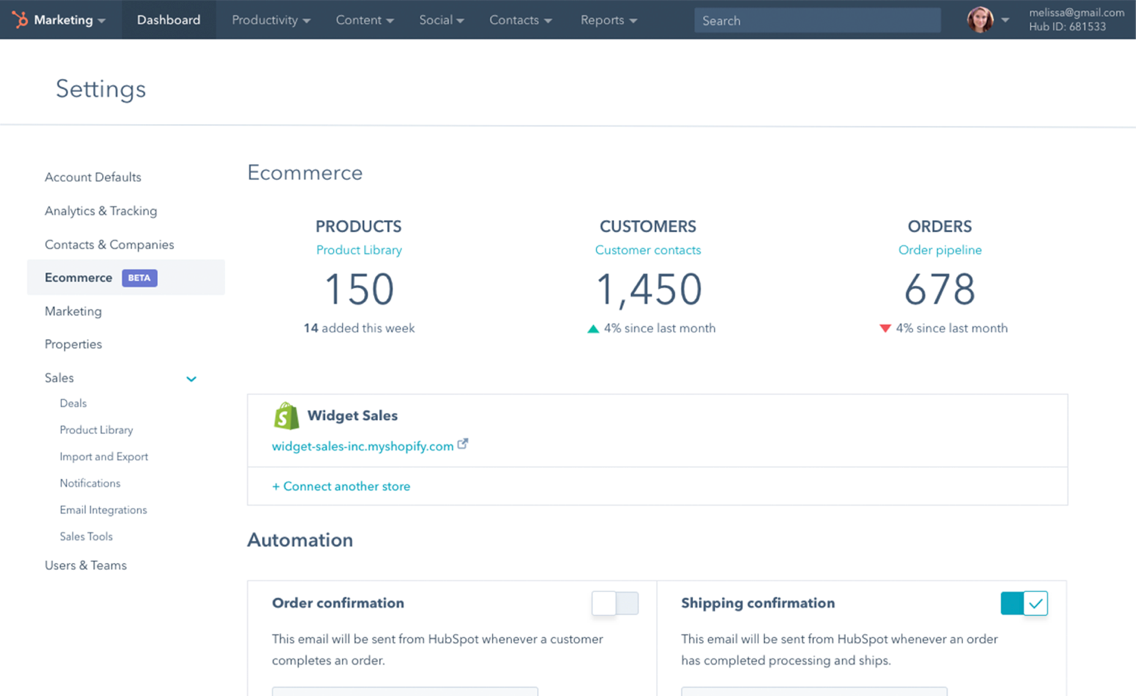
HubSpot connects directly with Shopify, combining CRM power with Shopify’s store functions. This link syncs customer data, orders, and products automatically. Businesses can track Shopify sales inside HubSpot and create targeted marketing campaigns. The integration improves sales tracking and customer outreach in one platform.
Pricing And Affordability Breakdown
Choosing between Shopify and HubSpot means understanding their pricing clearly. Each platform offers unique plans and costs. These affect your budget and growth potential. This section breaks down pricing tiers, fees, and overall value. It helps you decide which fits your business needs and wallet best.
Shopify Pricing Tiers And Payment Processing Fees
Shopify offers three main pricing plans:
| Plan | Monthly Cost | Credit Card Rates (Using Shopify Payments) | Transaction Fees (Using Third-Party Gateways) |
|---|---|---|---|
| Basic Shopify | $39 | 2.9% + 30¢ per transaction | 2.0% |
| Shopify | $105 | 2.6% + 30¢ per transaction | 1.0% |
| Advanced Shopify | $399 | 2.4% + 30¢ per transaction | 0.5% |
Shopify Payments removes extra transaction fees, saving money.
Higher plans reduce credit card rates, which benefits high-volume sellers.
Hubspot Pricing Structure And Onboarding Costs
HubSpot offers a free CRM with no expiration. It suits startups and small businesses.
Paid plans include:
- Starter: Starts at $20/month, adds basic sales tools.
- Professional: About $500/month, includes automation and analytics.
- Enterprise: From $1,200/month, for advanced customization.
HubSpot’s onboarding costs vary by package. Some businesses pay for setup help or training.
Free CRM helps reduce initial costs. Paid plans add value for growing companies.
Cost Implications Of Using Third-party Payment Gateways
Shopify adds transaction fees on third-party gateways like PayPal or Stripe.
These fees range from 0.5% to 2% per sale, depending on your plan.
Choosing Shopify Payments avoids these extra fees.
HubSpot does not directly handle payment processing. You integrate third-party gateways, which charge their own fees.
Consider gateway fees and integration costs when budgeting.
Long-term Affordability And Value Considerations
Shopify’s pricing suits businesses focused on e-commerce sales volume.
Lower transaction fees on higher plans increase profit margins.
HubSpot offers strong CRM features that improve customer management.
Free CRM reduces upfront costs, but advanced tools require higher payments.
Think about growth plans and feature needs to assess value over time.
Both platforms have costs beyond pricing: apps, themes, and add-ons can add up.
Balance basic fees with long-term benefits for smart budgeting.
Pros And Cons Based On Real-world Usage
Choosing between Shopify and HubSpot depends on business needs and user experience. Each platform offers unique strengths and faces specific challenges. This section highlights real-world pros and cons to help entrepreneurs make informed decisions.
Advantages Of Shopify For E-commerce Entrepreneurs
- User-friendly Store Setup: Shopify simplifies online store creation with easy drag-and-drop tools.
- Robust Payment Processing: Shopify Payments integrates seamlessly, reducing extra transaction fees.
- Wide Range of Themes and Apps: Users can customize stores with numerous themes and plugins.
- Strong Inventory Management: Shopify helps track products, orders, and sales efficiently.
- Scalable Plans: Options from Basic to Advanced support growing business needs.
Shopify’s focus on e-commerce makes it ideal for entrepreneurs focused on online sales.
Limitations And Challenges With Shopify
- Additional Transaction Fees: Using third-party payment gateways adds fees on top of Shopify charges.
- Cost Can Increase Quickly: Monthly plans plus app costs add up for small businesses.
- Limited Built-in Marketing Tools: Requires external apps for advanced marketing features.
- Less Focus on CRM: Shopify’s customer management is basic compared to dedicated CRM platforms.
These factors may affect startups with tight budgets or complex marketing needs.
Benefits Of Hubspot’s All-in-one Marketing And Crm Suite
- Free CRM with No Expiration: HubSpot’s CRM unifies all customer data on one platform.
- Integrated Marketing Tools: Email, social media, and lead tracking work together seamlessly.
- AI-Powered Insights: HubSpot uses AI to simplify data analysis and customer understanding.
- Customizable and Scalable: Suitable for startups and small businesses aiming to grow.
- Centralized Sales and Marketing: Aligns teams with shared data and workflows.
HubSpot offers a comprehensive solution beyond just sales, focusing on customer relationships.
Drawbacks And Cost Concerns With Hubspot
- Higher Pricing for Advanced Features: Premium plans can be expensive for small startups.
- Complexity for Beginners: The suite’s many tools may overwhelm new users at first.
- Limited E-Commerce Capabilities: HubSpot lacks built-in online store features like Shopify.
- Requires Time to Learn: Businesses may need training to use the platform effectively.
Cost and learning curve could slow adoption for some businesses.
Ideal Users And Use Case Scenarios
Choosing between Shopify and HubSpot depends on your business needs and goals. Each platform serves distinct purposes, fitting different user profiles. Understanding who benefits most from each helps in selecting the right tool.
Who Should Choose Shopify For Their Online Store?
Shopify is perfect for businesses focused on selling products online. It offers a straightforward setup and powerful e-commerce features. Ideal users include:
- Small to medium-sized retailers wanting an easy online store
- Entrepreneurs launching dropshipping or physical product sales
- Businesses seeking built-in payment gateways and shipping tools
- Users who prefer a platform dedicated solely to e-commerce
Shopify supports multiple sales channels like social media and marketplaces. It handles inventory, orders, and customer payments efficiently.
When Hubspot Is The Better Choice For Business Growth
HubSpot suits companies aiming to grow their customer relationships beyond sales. It excels as a CRM and marketing platform. Best for:
- Startups and small businesses needing organized customer data
- Teams wanting to automate marketing, sales, and customer support
- Companies focused on lead nurturing and inbound marketing
- Businesses that require detailed analytics and reporting
HubSpot offers a free CRM with AI tools to simplify customer insights. It centralizes contacts, deals, and communication in one place.
Businesses Benefiting From Combining Shopify And Hubspot
Some businesses gain from using both Shopify and HubSpot together. This combination works well for those who:
- Operate online stores but want stronger marketing and CRM tools
- Seek to improve customer retention through personalized campaigns
- Need sales data synced with marketing automation for better targeting
- Want to track customer journeys from first visit to purchase
| Benefit | Shopify Role | HubSpot Role |
|---|---|---|
| Order Management | Handles product listings and payments | Tracks customer data linked to purchases |
| Marketing Automation | Basic promotional tools | Advanced email campaigns and lead nurturing |
| Customer Insights | Sales data and customer profiles | Segmentation and behavior analysis |
Scenarios Where Integration Enhances Operational Success
Integration of Shopify and HubSpot boosts efficiency in several cases:
- Multi-channel marketing: Sync Shopify sales with HubSpot campaigns for targeted messaging.
- Customer support: Use HubSpot to track support tickets linked to Shopify orders.
- Sales reporting: Combine Shopify revenue data with HubSpot analytics for insights.
- Lead management: Capture leads on HubSpot and convert them into Shopify customers.
This integration helps teams work smarter and serve customers better. It reduces manual data entry and keeps teams aligned.
Conclusion: Making The Right Choice For E-commerce Success
Choosing between Shopify and HubSpot is crucial for your e-commerce journey. Both platforms offer unique strengths that cater to different business needs. Understanding their key differences and aligning them with your goals will drive better results. This section breaks down the essentials to help you decide.
Summary Of Key Differentiators
| Feature | Shopify | HubSpot |
|---|---|---|
| Primary Focus | E-commerce store building and management | CRM with marketing and sales automation |
| Best For | Retailers needing a full online store solution | Startups & small businesses managing customer relationships |
| Pricing Model | Subscription plans with transaction fees | Free CRM with optional paid upgrades |
| Payment Processing | Built-in Shopify Payments or third-party gateways | Integrates with payment and sales tools via CRM |
| Core Strength | Online store setup, product management, payment handling | Customer data unification, marketing automation, AI insights |
Final Recommendations Based On Business Needs
- Choose Shopify if your goal is to launch or scale an online store quickly.
- Choose HubSpot if your focus is managing customer relationships and marketing with a free CRM tool.
- Consider Shopify for businesses prioritizing seamless payment and product management.
- Opt for HubSpot when detailed customer insights and automation improve sales and marketing efforts.
- Small businesses benefit from HubSpot’s free CRM without time limits.
Future Trends In E-commerce And Crm Integration
Integration between e-commerce platforms and CRM systems will grow stronger. Expect more tools to combine sales data and customer behavior automatically. AI will play a key role, offering smarter customer targeting and personalized experiences. Platforms like HubSpot are advancing AI features to simplify data understanding.
Shopify and HubSpot both invest in APIs and integrations. This allows businesses to create tailored workflows connecting store operations with marketing efforts. Future-ready companies will use these integrations to increase efficiency and boost customer loyalty.

Credit: www.shopify.com
Frequently Asked Questions
Is Hubspot The Same As Shopify?
HubSpot is a CRM and marketing platform, while Shopify is an eCommerce platform. They serve different business needs.
How Much Does Shopify Take From A $100 Sale?
Shopify charges a 2. 9% + 30¢ fee on a $100 sale using Shopify Payments. Third-party gateways add extra fees.
Is Shopify Still Relevant In 2025?
Shopify remains highly relevant in 2025, offering robust ecommerce features, easy scalability, and strong integrations for businesses. It continues to lead in user-friendly design and reliable payment processing. Many retailers trust Shopify for its innovation and constant updates, keeping it competitive and effective.
What Are The Downsides Of Hubspot?
HubSpot can become costly as your business grows. It includes mandatory onboarding fees and year-long contracts. Some key features require expensive upgrades. Its all-in-one design may limit flexibility for specific needs.
Conclusion
Choosing between Shopify and HubSpot depends on your business needs. Shopify suits those focused on ecommerce and store design. HubSpot works well for managing customer relationships and marketing. HubSpot offers a free CRM that keeps data organized and simple. It helps startups and small businesses grow without extra costs. Visit HubSpot’s official site to learn more. Both tools have strengths; pick the one that fits your goals best. Take time to explore features before deciding. The right choice can improve your business success.