Choosing the right sales tool can make or break your business growth. If you’re torn between Pipedrive and Apollo, you’re not alone.
Both platforms promise to boost your sales productivity, but they serve different needs and styles. What if you could quickly find out which one fits your unique goals and workflow? This article breaks down the key differences, strengths, and weaknesses of Pipedrive vs Apollo, helping you make a confident choice that drives results.
Keep reading to discover which platform will truly transform your sales process and help you close more deals.
Credit: www.pipedrive.com
Sales Focus And Core Strengths
Understanding the sales focus and core strengths of Pipedrive and Apollo helps in choosing the right tool. Each platform serves different sales needs and styles. Their unique features cater to distinct parts of the sales process. This section highlights those key areas to clarify their main advantages.
Apollo’s Prospecting Capabilities
Apollo excels at finding and reaching new leads quickly. It offers a large database of contacts and companies. Users can filter prospects by industry, location, and role. Apollo also supports automated email sequences to engage potential clients. This makes it ideal for outbound sales teams focused on cold outreach. The platform helps users save time on research and initial contact efforts.
Pipedrive’s Pipeline Management
Pipedrive focuses on managing deals through the sales pipeline. It provides a visual interface to track each stage of a sale. Users can see where deals stand and what actions are next. The tool encourages clear organization and follow-ups. Pipedrive is built for teams that want to improve deal closure rates. Its simplicity makes it easy for salespeople to adopt and use daily.
Ideal User Profiles
Apollo suits sales teams that prioritize lead generation and outreach. It fits startups and companies growing their customer base. Pipedrive suits sales teams managing ongoing deals and client relationships. It works well for businesses with structured sales processes. Choosing depends on whether the focus is on finding prospects or closing deals.
Feature Comparison
Choosing the right sales tool depends on the features that fit your business needs. Both Pipedrive and Apollo offer strong functionalities but differ in focus and depth. This section compares their key features to help you understand their strengths.
Contact And Lead Management
Pipedrive excels in managing contacts and leads through an intuitive visual pipeline. It allows users to track deals at every stage. Apollo offers basic contact management but focuses more on lead generation. Its database includes millions of contacts for outreach. Pipedrive suits teams needing detailed deal tracking. Apollo fits users aiming to find and engage new leads quickly.
Email Automation And Outreach
Apollo provides robust email automation tools with sequences and follow-ups. It targets cold outreach and helps scale campaigns efficiently. Pipedrive includes email integration but with simpler automation features. It supports sending and receiving emails within the platform. Apollo’s strength lies in multi-step email campaigns. Pipedrive is better for basic email communication linked to deals.
Reporting And Analytics
Pipedrive offers detailed reporting dashboards showing sales performance and pipeline health. It helps managers monitor team activities closely. Apollo provides analytics focused on outreach success and email engagement rates. Its reports highlight which campaigns work best. Pipedrive serves users needing comprehensive sales insights. Apollo suits those tracking lead generation and email results.
Integration Options
Pipedrive supports many third-party integrations like Google Workspace, Zapier, and more. It connects with popular tools for sales, marketing, and support. Apollo also offers integrations but focuses on syncing with CRMs and email platforms. It works well with Pipedrive for combining CRM and outreach power. Both platforms allow connection to other apps to fit your workflow.
Pricing And Plans
Pricing and plans play a key role in choosing the right sales tool. Both Pipedrive and Apollo offer multiple options to fit different business needs. Understanding each platform’s pricing structure helps teams select the best fit. This section breaks down the pricing tiers and value for small and large teams.
Apollo Pricing Tiers
Apollo offers three main pricing plans. The Basic plan starts at $14 per user per month. It covers essential sales engagement and prospecting tools. The Professional plan costs $23 per user per month. It adds automation features and advanced analytics. The Enterprise plan is the highest tier at $40 per user per month. It includes custom integrations and priority support.
Pipedrive Pricing Options
Pipedrive provides four pricing levels. The Essential plan starts at $14.90 per user monthly. It covers contact and deal management. The Advanced plan costs $24.90 per user and offers email integration and workflow automation. The Professional plan is $49.90 per user with full sales reporting. The Enterprise plan is $99 per user and includes enhanced security and support.
Value For Small And Large Teams
Small teams often prefer Apollo’s Basic plan for its prospecting tools. It helps jumpstart cold outreach without high costs. Pipedrive’s Essential plan suits small teams needing simple CRM features. Larger teams benefit from Pipedrive’s Professional and Enterprise plans. These plans offer more automation and reporting. Apollo’s Enterprise plan fits teams wanting advanced data and custom solutions. Both platforms scale well but target different business focuses.
User Experience And Interface
User experience and interface play a crucial role in choosing a CRM platform. A clean and intuitive design helps users work faster and with less frustration. Both Pipedrive and Apollo offer unique user interfaces tailored to sales teams. This section explores their ease of setup, navigation, and customization options.
Ease Of Setup
Pipedrive provides a quick setup process with clear step-by-step guidance. New users can import contacts and deals without hassle. Apollo also offers an easy onboarding experience focused on cold outreach tools. It includes preset templates and workflows to speed up initial use. Both platforms aim to reduce the time it takes to start selling.
Navigation And Usability
Pipedrive features a straightforward dashboard with visual sales pipelines. Users can drag and drop deals between stages with simple clicks. Apollo’s interface centers on prospecting and outreach, showing contact lists and communication history clearly. Both platforms keep menus minimal and focused, helping users find key features quickly. Pipedrive’s design suits users who prefer visual tracking. Apollo works well for teams focused on email campaigns and lead generation.
Customization And Flexibility
Pipedrive allows customization of pipelines, fields, and sales stages to match different sales processes. Users can tailor dashboards and reports to focus on important data. Apollo offers flexible email sequences and call scripts that teams can adjust freely. It also supports custom tags and filters for better lead management. Both tools provide flexibility but target slightly different workflows. Pipedrive fits those who want a visual, pipeline-driven CRM. Apollo suits users focused on outreach automation and data segmentation.
Data Sync And Integration
Data sync and integration play a crucial role in choosing the right sales platform. Efficient data flow keeps your team updated and reduces errors. Both Pipedrive and Apollo offer options to connect with other tools and sync information. Understanding their integration capabilities helps you decide which one fits your business needs.
Apollo And Pipedrive Integration
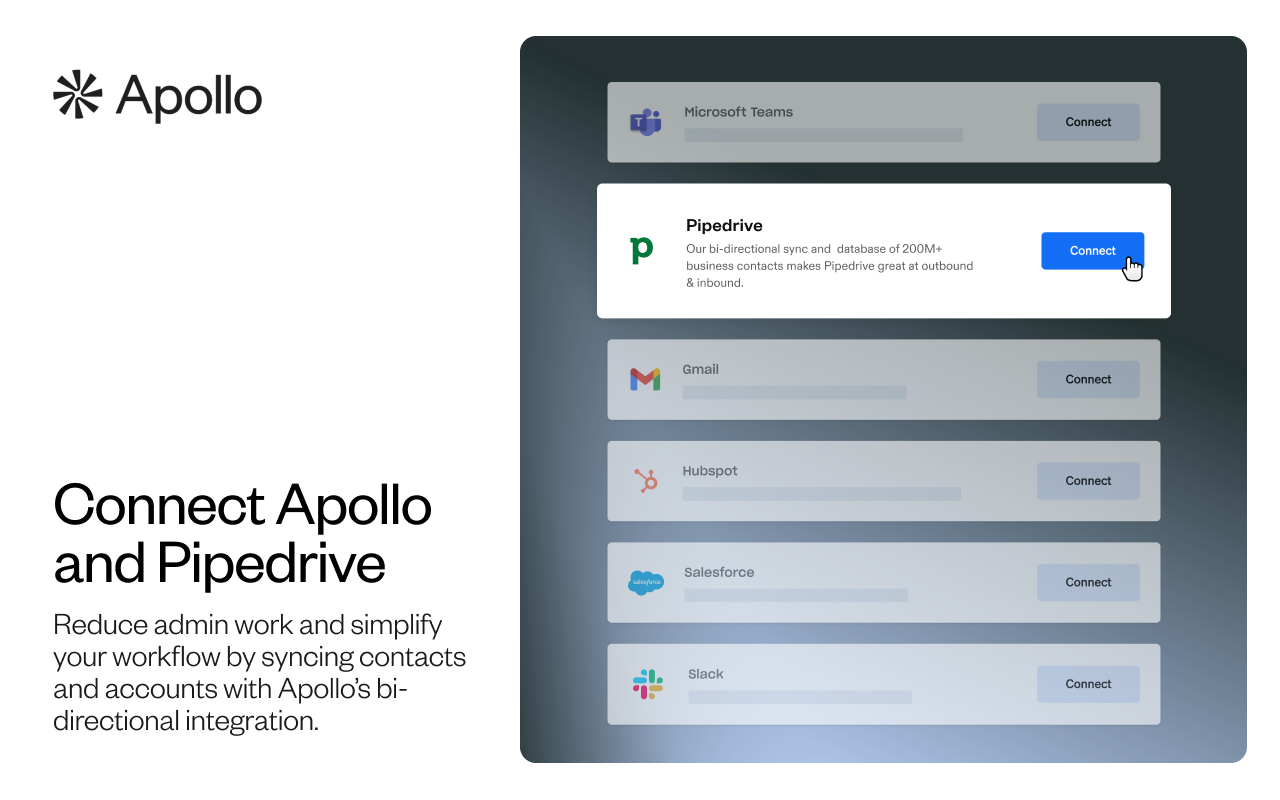
Apollo connects directly with Pipedrive for seamless data exchange. This integration syncs contacts, deals, and activities between the two platforms. Changes made in one system update automatically in the other. It saves time by avoiding manual data entry and keeps your sales pipeline accurate. The sync supports bi-directional updates, so your team works with the latest information.
Third-party Apps Compatibility
Both Pipedrive and Apollo support many third-party apps. Pipedrive integrates with popular tools like Zapier, Mailchimp, and Google Workspace. Apollo also connects with major platforms such as Salesforce, HubSpot, and Slack. These integrations extend functionality and help streamline workflows. Using familiar apps with your CRM boosts efficiency and reduces switching between programs.
Automation Capabilities
Pipedrive offers automation features to handle repetitive tasks. You can set triggers for deal updates, email alerts, and task creation. Apollo focuses on automating outreach and follow-ups with built-in sequences. Both platforms reduce manual work and free up time for sales teams. Automations help maintain consistent communication and improve lead management without extra effort.
Customer Support And Resources
Customer support and resources play a key role in choosing a CRM tool. Both Pipedrive and Apollo offer various types of support to help users succeed. Understanding their support channels, training options, and user communities can guide your choice.
Support Channels
Pipedrive provides support through live chat, email, and phone. Their team responds quickly to user questions and issues. Apollo offers support mainly via email and live chat. Phone support is limited or unavailable. Both platforms have knowledge bases filled with helpful articles and guides. Pipedrive’s phone support can be a big plus for urgent problems.
Training And Onboarding
Pipedrive includes step-by-step onboarding and tutorials for new users. They provide video lessons and webinars to explain features clearly. Apollo offers training materials like guides and tutorials. However, their onboarding is less structured than Pipedrive’s. Users new to CRM may find Pipedrive’s training easier to follow. Both platforms aim to reduce the learning curve for teams.
Community And User Feedback
Pipedrive has a large user community and active forums. Users share tips, ask questions, and discuss updates regularly. Apollo’s community is smaller but growing steadily. Both platforms gather user feedback to improve features. Pipedrive’s longer presence means more reviews and case studies. This insight helps potential users understand real-world experiences.
Use Case Scenarios
Choosing between Pipedrive and Apollo depends on the specific needs of your sales team. Each tool offers unique strengths suited for different sales approaches and company sizes. Understanding these use case scenarios helps in selecting the right platform.
Both platforms serve sales teams but excel in different areas. This section breaks down which tool fits best for various sales environments.
Startups And Early-stage Sales Teams
Startups need simple, easy-to-use tools to manage their sales pipeline. Pipedrive offers a visual pipeline that helps new sales reps track deals clearly. It is intuitive and requires minimal setup time.
Apollo focuses on outreach with strong prospecting features. It helps small teams find and connect with cold leads efficiently. For startups aiming to grow quickly through outbound sales, Apollo provides useful automation tools.
Early-stage teams benefit from Apollo’s integrated data and outreach sequences. Pipedrive suits teams that prioritize managing inbound leads and deal tracking.
Enterprise-level Sales Organizations
Large sales organizations need robust reporting and customization. Pipedrive supports advanced workflows and integration with many other business tools. It scales well for teams managing complex pipelines.
Apollo offers powerful data enrichment and prospecting at scale. It fits enterprises focusing heavily on outbound sales and lead generation. Apollo’s automation reduces manual work for large teams.
Enterprises with mixed sales models often use both platforms. Pipedrive manages ongoing deals, while Apollo drives new lead discovery.
Cold Outreach Vs Inbound Lead Management
Cold outreach requires finding new contacts and sending personalized emails. Apollo excels in this area with built-in lead databases and email sequences. It automates follow-ups and tracks engagement effectively.
Inbound lead management focuses on handling leads that show interest first. Pipedrive organizes these leads through stages and helps sales reps close deals. Its visual pipeline makes lead progress easy to see.
Teams focused on cold outreach gain more from Apollo’s tools. Those managing inbound leads benefit from Pipedrive’s clear deal tracking and simple interface.
Credit: www.pipedrive.com
Pros And Cons Summary
Choosing between Pipedrive and Apollo requires understanding their key strengths and weaknesses. This pros and cons summary breaks down what each platform offers. It highlights factors that affect your sales process and team productivity. Clear insights help you pick the right tool for your business needs.
Strengths Of Apollo
Apollo excels in lead generation and prospecting. It provides a large database of contacts and companies. Users can find new prospects easily with its smart search filters. Apollo offers good automation for outreach campaigns. It helps sales teams save time on repetitive tasks. The platform integrates well with other tools, improving workflow efficiency. Apollo suits businesses focused on cold outreach and expanding their pipeline.
Strengths Of Pipedrive
Pipedrive shines as a simple, visual CRM. It offers a clear sales pipeline view that is easy to use. The interface helps teams track deals and progress smoothly. Pipedrive supports inbound lead management effectively. It has strong email integration and activity tracking. Customization options allow adapting the CRM to specific sales processes. Pipedrive is ideal for teams that want straightforward deal management and organization.
Limitations To Consider
Apollo’s email automation is limited compared to some CRM tools. It may not handle inbound leads well, making it less ideal for certain sales models. Pipedrive lacks advanced prospecting features and a large contact database. It focuses more on managing existing leads than finding new ones. Both platforms require some learning curve to maximize benefits. Choosing the best depends on your sales focus and team needs.

Credit: www.pipedrive.com
Frequently Asked Questions
Who Is The Competitor Of Apollo?
Apollo’s main competitors include Pipedrive, HubSpot, Salesforce, and Zoho CRM. These platforms offer scalable CRM and sales automation solutions.
Does Apollo Integrate With Pipedrive?
Yes, Apollo integrates with Pipedrive through a seamless bi-directional sync. This keeps data accurate and reduces manual entry.
Can Apollo Be A Crm?
Apollo can function as a basic CRM focused on cold outreach and prospecting. It lacks advanced inbound lead management and automation features. For complex sales processes, tools like HubSpot or Pipedrive offer better CRM capabilities and scalability. Apollo suits startups prioritizing lead generation.
Is Apollo The Best Lead Generator?
Apollo is a strong lead generator, especially for cold outreach and prospecting. It offers quality data but may lack advanced CRM features. Depending on your needs, tools like Pipedrive or HubSpot might suit better for inbound leads and automation.
Conclusion
Choosing between Pipedrive and Apollo depends on your sales needs. Pipedrive suits teams focused on managing deals and pipelines. Apollo works well for those who want strong prospecting tools. Both platforms help improve sales but in different ways. Consider your priorities: pipeline management or lead generation.
Testing each tool can clarify which fits your workflow best. Clear goals lead to better sales results. Make a choice that supports your business growth smoothly.