Choosing the right marketing platform can make or break your business growth. If you’re torn between Eloqua and HubSpot, you’re not alone.
Both promise powerful tools to boost your marketing efforts, but which one truly fits your needs? Whether you’re a small business owner or part of a large enterprise, understanding their key differences will help you make smarter decisions. Keep reading to discover how Eloqua and HubSpot stack up—so you can pick the solution that drives real results for your goals.
Platform Overviews
Choosing the right marketing platform can shape your business success. HubSpot and Eloqua are two popular options. Both offer tools to manage campaigns and engage customers. Understanding their features helps in making a smart choice.
Each platform has unique strengths. HubSpot focuses on ease of use and broad marketing needs. Eloqua targets larger enterprises with complex marketing demands. Let’s explore what each platform offers.
Hubspot Features
HubSpot provides an all-in-one marketing suite. It includes email marketing, social media tools, and landing pages. Users can automate campaigns and track customer behavior easily. The platform supports CRM and sales integration. HubSpot’s interface is user-friendly for small to medium teams. It offers real-time analytics and reporting. Lead nurturing and segmentation are simple with built-in workflows. HubSpot also provides content management and SEO tools.
Eloqua Features
Eloqua is designed for advanced marketing automation. It supports multi-channel campaigns including email, social, and mobile. Eloqua offers deep segmentation and targeting options. The platform integrates with many CRM systems. It provides detailed analytics and campaign tracking. Eloqua’s tools suit large teams with complex workflows. It supports lead scoring and personalized customer journeys. The platform excels in managing large data sets and enterprise needs.
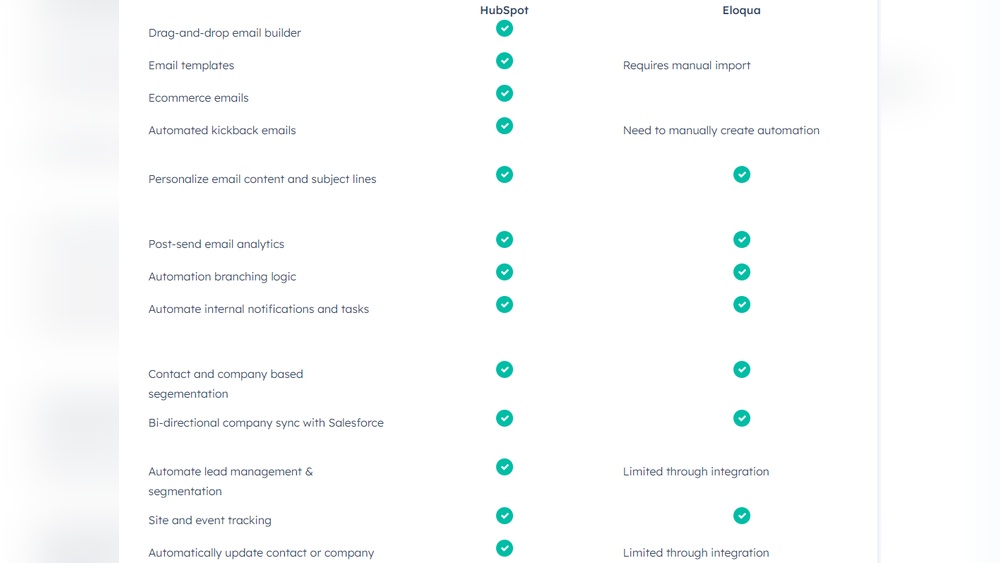
Credit: www.atakinteractive.com
Target Users
Understanding the target users of Eloqua and HubSpot helps choose the right platform. Each tool suits different business sizes and needs. Knowing this can improve marketing efforts and ROI.
Both platforms offer powerful marketing automation, but their ideal users vary. Let’s explore who benefits most from each.
Small And Medium Businesses
HubSpot fits well with small and medium businesses. It offers easy-to-use tools and a simple setup. Teams without deep technical skills can manage campaigns and track leads effectively. HubSpot’s pricing scales with business growth, making it affordable for startups and growing companies. It combines CRM, email marketing, and social media tools in one place. This all-in-one approach reduces the need for multiple software solutions.
Eloqua may be less common for smaller businesses due to its complexity. The platform requires more technical knowledge and a larger budget. Small teams might find it overwhelming or costly. HubSpot’s user-friendly interface suits businesses needing quick results without complex setups.
Large Enterprises
Eloqua shines in large enterprises with complex marketing needs. It supports advanced segmentation and multi-channel campaigns at scale. Big teams can customize workflows and integrate deeply with other enterprise systems. Eloqua handles high volumes of data and contacts efficiently. Its robust features support global marketing strategies and compliance requirements.
HubSpot also serves enterprises but may lack some advanced features. Large companies with specialized needs often prefer Eloqua for its flexibility and power. Eloqua’s tools allow precise targeting and detailed analytics. This helps enterprises optimize large, diverse marketing programs.
Marketing Automation
Marketing automation helps businesses send the right message at the right time. It saves time by automating repetitive tasks. Both Eloqua and HubSpot offer strong marketing automation features. They help teams create workflows, segment contacts, and track campaign results. Understanding their automation tools can guide your choice.
Hubspot Automation Tools
HubSpot provides an easy-to-use automation builder. It allows users to create workflows without coding. You can automate emails, lead nurturing, and follow-ups. HubSpot also integrates social media and landing page actions. Its visual editor shows clear paths for customer journeys. HubSpot supports personalization based on contact behavior. It offers detailed reporting to measure campaign success. This tool suits teams who want quick setup and flexibility.
Eloqua Automation Capabilities
Eloqua offers advanced automation for large enterprises. It provides complex workflow options to handle multiple triggers. Eloqua supports deep segmentation and scoring models. It integrates well with CRM systems and external data sources. Users can automate multi-channel campaigns across email, web, and mobile. Eloqua’s interface is robust but may require training. It excels in detailed analytics and campaign optimization. This platform fits businesses with complex marketing needs.
User Experience
User experience plays a vital role in choosing the right marketing platform. It affects how quickly teams adopt the tool and how efficiently they can complete tasks. Eloqua and HubSpot offer different experiences tailored to different user needs. Understanding their ease of use and learning curve helps businesses decide which fits best.
Ease Of Use
HubSpot provides a clean and simple interface. Its dashboard is intuitive, making navigation easy for beginners. Users can quickly find key features like email marketing, contact management, and analytics. The drag-and-drop editor allows fast creation of landing pages and emails without coding skills.
Eloqua’s interface is more complex. It targets advanced users with detailed options and customization. This complexity suits businesses with experienced marketing teams. Some users may find Eloqua’s layout overwhelming at first. The platform offers powerful tools but requires more clicks to reach certain functions.
Learning Curve
HubSpot is designed for quick onboarding. New users often learn the basics within a few days. The platform includes helpful tutorials and a strong support community. This reduces the time needed to start running campaigns effectively.
Eloqua demands a longer learning period. Its advanced features require more training and experience. Users may need formal courses or dedicated time to explore all capabilities. This can slow initial adoption but benefits users aiming for deep marketing automation.
Integration Options
Integration options play a key role in choosing between Eloqua and HubSpot. Both platforms support connections with various tools to boost marketing efforts. This section explores the integration capabilities of each platform.
Hubspot Integrations
HubSpot offers a wide range of integrations with popular apps. It connects easily with CRM systems, email platforms, and social media tools. The marketplace has thousands of apps available. Users can link HubSpot to Google Analytics, Salesforce, and Shopify. These integrations help centralize data and automate workflows. HubSpot also supports API access for custom connections. This flexibility suits businesses of all sizes.
Eloqua Integrations
Eloqua focuses on integrations that support enterprise marketing needs. It connects well with Oracle products and other CRM systems like Salesforce and Microsoft Dynamics. Eloqua offers pre-built connectors for email, social, and analytics platforms. Its API allows developers to create tailored solutions. Eloqua’s integrations emphasize data syncing and campaign automation. The platform suits large companies with complex marketing stacks.
Pricing And Costs
Pricing and costs are key factors in choosing between Eloqua and HubSpot. Each platform has a unique pricing approach. Understanding these models helps businesses pick the right marketing tool. Both offer various plans, but their structures differ significantly.
Hubspot Pricing Structure
HubSpot provides a tiered pricing model. It starts with a free plan, ideal for small businesses. Paid plans include Starter, Professional, and Enterprise levels. Each plan increases in features and limits. Pricing depends on the number of contacts managed. Additional costs may apply for extra contacts or add-ons. HubSpot’s transparent pricing suits businesses wanting predictable expenses. Monthly or annual billing options are available for flexibility.
Eloqua Pricing Model
Eloqua uses a customized pricing approach. It often requires direct consultation for a quote. Pricing depends on factors like contact database size and feature needs. Eloqua targets medium to large enterprises. Its pricing tends to be higher compared to HubSpot. The platform charges based on monthly active contacts. Additional fees may apply for implementation and support services. Eloqua’s model fits businesses with complex marketing requirements and larger budgets.
Data And Analytics
Customer support is a key factor when choosing marketing automation software. It ensures smooth use and quick problem solving. Both Eloqua and HubSpot offer support, but their approaches differ.
Support Services In Hubspot
HubSpot provides multiple support channels. Users can access live chat, email, and phone support. The platform also offers a large knowledge base. Tutorials and guides help users learn at their own pace. HubSpot’s community forum allows users to share tips and ask questions. Support availability depends on the subscription plan. Higher-tier plans get faster and more personalized help.
Support Services In Eloqua
Eloqua offers dedicated support for its users. It includes phone and email support with expert staff. Eloqua provides detailed documentation and training resources. Oracle’s customer success managers assist with onboarding and strategy. Support is often tailored to enterprise clients. The response times can vary based on service level agreements. Eloqua’s support focuses on complex marketing needs and integrations.

Credit: www.portagelabs.io
Customer Support
Understanding the strengths and weaknesses of Eloqua and HubSpot helps businesses choose the right marketing platform. Both tools offer powerful features but differ in usability, pricing, and target audience. Evaluating these pros and cons clarifies which suits your needs best.
Hubspot Pros And Cons
HubSpot offers an intuitive interface that simplifies marketing tasks for beginners. It integrates email, social media, and landing pages in one place. Automation tools help streamline campaigns with ease.
On the downside, HubSpot can become costly as your contact list grows. Some essential features require expensive upgrades. The platform may lock advanced options behind paywalls. Contracts often demand a one-year commitment. Flexibility is limited due to its all-in-one design.
Eloqua Pros And Cons
Eloqua excels in complex marketing automation and detailed segmentation. It suits large enterprises with advanced needs. The platform supports multi-channel campaigns and offers deep analytics. Customization options allow precise targeting.
However, Eloqua has a steeper learning curve for new users. It requires more technical expertise to manage daily tasks. The pricing is higher, making it less ideal for small businesses. Its focus on inbound marketing is narrower compared to HubSpot.
Strengths And Weaknesses
Choosing the right marketing automation platform can shape your business growth. Eloqua and HubSpot both offer strong tools, but their strengths differ. Assessing your needs helps pick the best fit. Understanding each platform’s focus and flexibility ensures smoother adoption and better results.
Business Needs Assessment
Start by listing your marketing goals and challenges. Eloqua suits complex campaigns and large enterprises. HubSpot fits small to mid-sized teams needing all-in-one solutions. Consider your team’s skill level and available resources. Identify must-have features like email marketing, CRM integration, or analytics. A clear list guides you toward the platform that matches your daily tasks and long-term plans.
Scalability Considerations
Think about how fast your business will grow. Eloqua supports large-scale, multi-channel campaigns with advanced customization. HubSpot scales well with modular plans that grow with your team’s needs. Check pricing changes as your contact list and features expand. Choose a platform that can adapt without disrupting your current workflows. Planning for growth avoids costly platform switches later.
Credit: insidea.com
Frequently Asked Questions
What Is The Difference Between Hubspot And Eloqua?
HubSpot suits small to medium businesses with easy-to-use, all-in-one marketing automation. Eloqua targets large enterprises with complex, customizable marketing needs.
Who Is Hubspot’s Biggest Competitor?
HubSpot’s biggest competitor is Salesforce, known for its robust CRM and marketing automation capabilities. Other strong rivals include Oracle Eloqua and Marketo.
What Crm Is Better Than Hubspot?
Act CRM, Zoho, and Salesforce often rank higher than HubSpot for advanced marketing automation and customizable features. Choose based on your business size and needs.
What Are The Downsides Of Hubspot?
HubSpot can become costly as your business grows. It requires mandatory onboarding fees and long contract commitments. Some key features remain locked behind expensive paywalls. Its all-in-one design may limit flexibility for specialized needs.
Conclusion
Choosing between Eloqua and HubSpot depends on your business needs. Eloqua suits larger teams needing advanced marketing automation. HubSpot works well for smaller teams wanting an easy-to-use platform. Both offer strong tools for email marketing and segmentation. Consider your budget and team skills before deciding.
Testing each platform can help find the best fit. The right choice will improve your marketing efforts and drive results.