Choosing the right CRM can change the way you connect with your customers and grow your business. If you’re torn between Salesforce CRM and Microsoft Dynamics, you’re not alone.
Both are powerful tools, but which one truly fits your needs? You’ll discover the key differences, strengths, and potential pitfalls of each platform. By the end, you’ll have a clear picture to decide which CRM will drive your success forward.
Ready to find out which one matches your goals? Let’s dive in.

Credit: www.crmsoftwareblog.com
Key Features
Choosing the right CRM depends on understanding its key features. Both Salesforce and Microsoft Dynamics offer strong tools. These features help businesses manage customer relationships, sales, and marketing efficiently.
Each platform has unique strengths. They cater to different business needs and sizes. Here is a clear look at what each CRM offers.
Salesforce Capabilities
Salesforce provides a cloud-based platform with extensive customization options. It includes powerful sales automation tools that track leads and opportunities. The platform supports marketing automation to create targeted campaigns. Customer service features offer case management and self-service portals. Salesforce also integrates AI for predictive analytics and smart insights. Mobile access allows teams to work from anywhere. Its AppExchange marketplace offers thousands of third-party apps. Reporting and dashboards are highly customizable for business analytics.
Microsoft Dynamics Strengths
Microsoft Dynamics integrates well with other Microsoft products like Office 365 and Azure. It offers flexible deployment options, including cloud and on-premises. The CRM focuses on sales, customer service, and field service management. It includes AI-driven insights to improve customer engagement. Dynamics features customizable workflows to automate tasks. The platform supports multi-channel communication including email and social media. Its user interface is familiar for Microsoft users, reducing training time. Reporting tools provide real-time data for decision making.
Pricing Structure
Understanding the pricing structure is vital when choosing between Salesforce CRM and Microsoft Dynamics. Each platform offers different pricing plans tailored to various business needs. Knowing these costs helps businesses budget effectively and select the right CRM solution.
Salesforce Licensing Costs
Salesforce uses a subscription-based pricing model. It charges per user, per month. Plans vary depending on features and business size.
There are four main editions: Essentials, Professional, Enterprise, and Unlimited. Essentials is the most basic plan. It suits small teams and starts at a lower cost. Enterprise offers advanced customization and automation options. Unlimited includes full access to features and support.
Additional costs may apply for add-ons like extra storage or advanced analytics. Salesforce often requires a yearly contract. This can impact upfront budget planning. Discounts may be available for large user numbers.
Microsoft Dynamics Pricing Models
Microsoft Dynamics offers flexible pricing options. It charges monthly per user or per app. This allows businesses to pay only for what they need.
Pricing depends on the product version, such as Sales, Customer Service, or Finance. Microsoft also provides bundled plans for multiple apps. These bundles can reduce overall costs.
Microsoft Dynamics includes cloud and on-premises deployment options. Cloud pricing is subscription-based. On-premises requires a one-time license fee plus maintenance costs. Businesses can adjust licenses as they grow.
Customization Options
Customization options define how well a CRM adapts to unique business needs. Both Salesforce and Microsoft Dynamics offer ways to tailor their platforms. Customization can range from simple changes to deep system modifications. These options affect user experience, efficiency, and overall satisfaction.
Salesforce Flexibility
Salesforce provides strong flexibility for customization. Users can modify layouts, fields, and workflows easily. The platform supports custom objects and apps built on its AppExchange marketplace. Developers use Apex code for advanced customization. This allows complex business rules and automation.
Salesforce also offers Lightning App Builder for drag-and-drop interface design. This tool helps create custom pages without coding. Its wide range of APIs supports integration with other systems. This flexibility suits businesses with specific or evolving needs.
Microsoft Dynamics Low-code Tools
Microsoft Dynamics focuses on low-code customization tools. Power Platform lets users build apps, workflows, and chatbots with little coding. This approach speeds up changes and reduces dependency on developers. The platform integrates well with other Microsoft products.
Users can customize forms, views, and dashboards through simple interfaces. Advanced users can use Microsoft’s development tools for deeper changes. Dynamics also supports custom plugins and business logic. This balance helps both technical and non-technical users adapt the CRM.
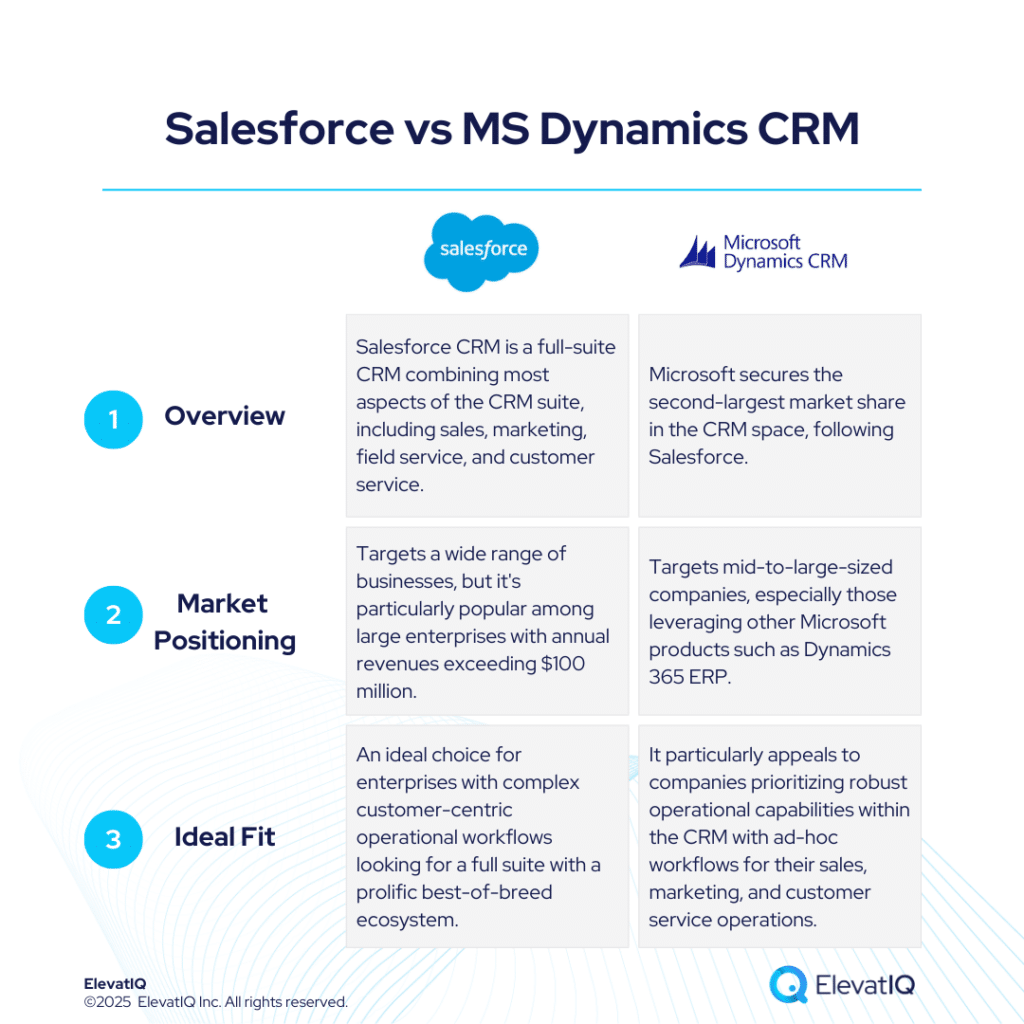
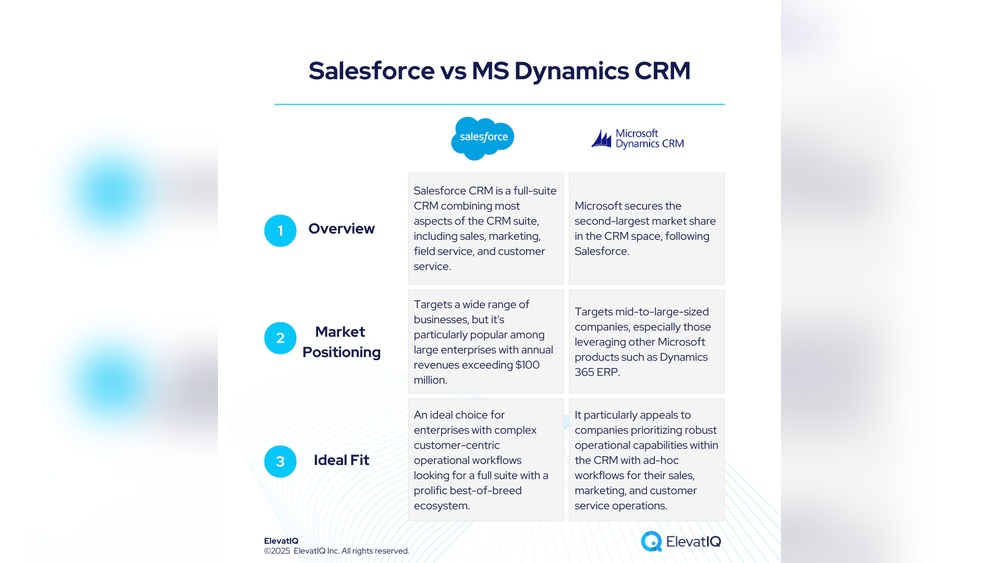
Credit: www.elevatiq.com
Integration And Compatibility
Integration and compatibility play a key role in choosing the right CRM for your business. Both Salesforce and Microsoft Dynamics offer strong options to connect with other tools. Smooth integration boosts productivity and reduces errors. Compatibility ensures the CRM works well with your existing systems. Below, we explore how each platform handles these aspects.
Salesforce Ecosystem
Salesforce provides a vast ecosystem of apps and services. Its AppExchange offers thousands of third-party integrations. Users find tools for marketing, sales, and customer service. The platform supports seamless data flow between apps. Salesforce also allows custom API connections for unique needs. This rich ecosystem helps businesses extend CRM functions easily. Many popular software solutions already integrate with Salesforce.
Microsoft Power Platform Integration
Microsoft Dynamics connects deeply with the Power Platform. This includes Power BI, Power Apps, and Power Automate. These tools help create custom apps and automate workflows without coding. Power BI offers advanced data analytics and visualization. Power Automate streamlines repetitive tasks across systems. Integration with Microsoft 365 apps like Outlook and Teams is strong. This suite helps businesses unify their data and processes efficiently.
User Experience
User experience plays a vital role in choosing a CRM system. It affects how easily teams can adopt and use the software. Both Salesforce CRM and Microsoft Dynamics offer strong user experiences. Their design and mobile features shape daily interactions for sales and support teams.
Interface And Usability
Salesforce provides a clean and modern interface. It focuses on clarity and simple navigation. Users find it easy to locate tools and data quickly. Custom dashboards help teams see key information at a glance.
Microsoft Dynamics offers a familiar look for users of other Microsoft products. Its interface integrates well with Office apps. Users can customize layouts and views to match their workflow. This reduces the learning curve for new users.
Both platforms allow drag-and-drop customization. This flexibility helps users tailor the system without coding. The usability of each CRM depends on user preference and specific business needs.
Mobile Access
Salesforce’s mobile app is fast and responsive. It supports offline access, so users work without internet. The app includes features like voice commands and AI assistance. This boosts productivity on the go.
Microsoft Dynamics also has a strong mobile app. It integrates with Microsoft Teams and Outlook for seamless communication. Users can update records and track activities from their phones. The app supports multiple devices and platforms.
Both CRMs provide secure mobile experiences. Mobile access ensures teams stay connected and productive anywhere. Choosing the best option depends on how mobile your workforce is.
Customer Support
Customer support is a crucial factor in choosing between Salesforce CRM and Microsoft Dynamics. Both platforms offer solid support options that help businesses resolve issues quickly. Good support ensures your CRM works smoothly without long delays.
Strong customer support reduces downtime and improves user experience. It also helps teams get the most from the CRM features. Here is a look at the support services from both Salesforce and Microsoft Dynamics.
Salesforce Support Services
Salesforce provides multiple support plans tailored to business needs. Their support includes 24/7 phone and online help. Users can access a vast knowledge base with guides and tutorials. Salesforce also offers a community forum where users share solutions.
For complex issues, Salesforce provides expert assistance through case management. Their support team is trained to handle technical and functional problems. Premium plans give access to faster response times and personalized help.
Microsoft Dynamics Assistance
Microsoft Dynamics offers comprehensive support through various channels. Customers get access to online resources, including forums and FAQs. Technical support is available via phone and email during business hours.
Microsoft also provides professional support plans for faster issue resolution. These plans include dedicated support engineers and priority case handling. Dynamics users benefit from integration with other Microsoft products for smoother support.
Market Presence
Market presence plays a vital role in choosing a CRM platform. It reflects how widely a system is used and trusted. Both Salesforce CRM and Microsoft Dynamics have strong market positions. They serve diverse businesses worldwide. Understanding their market presence helps companies make an informed choice.
Industry Adoption
Salesforce CRM enjoys broad adoption across many sectors. It is popular in technology, finance, retail, and healthcare. Its flexible design suits small startups and large enterprises. Microsoft Dynamics also holds a solid place in industries like manufacturing, government, and professional services. Its integration with Microsoft products appeals to businesses invested in that ecosystem. Both platforms continue to grow by adapting to industry needs.
Global Reach
Salesforce has a vast global footprint with data centers in multiple regions. It supports customers in over 100 countries and offers local language options. Microsoft Dynamics leverages Microsoft’s extensive global network, reaching businesses in more than 190 countries. Its compatibility with Microsoft Azure ensures reliable worldwide service. Both CRMs provide strong support and infrastructure for international companies.
Performance And Scalability
Performance and scalability play key roles in CRM success. Both Salesforce CRM and Microsoft Dynamics aim to deliver smooth operation and growth support. Businesses need solutions that handle increasing demands without slowing down. Understanding how each CRM manages large data and scales with business growth helps in making the right choice.
Handling Large Data
Salesforce CRM processes large volumes of data using its cloud infrastructure. It offers tools to clean and organize data efficiently. The platform supports complex queries and real-time analytics without major delays. Microsoft Dynamics also manages big data well through its integration with Microsoft Azure. It provides flexible data storage options and fast access speeds. Both platforms maintain data integrity and performance under heavy load.
Scaling With Business Growth
Salesforce scales seamlessly by adding more users and features as businesses grow. Its multi-tenant architecture allows quick resource allocation. Companies can customize workflows and automate tasks easily to match expansion. Microsoft Dynamics scales by leveraging Microsoft’s cloud services and modular design. Users can add new modules and integrations based on evolving needs. Both CRMs support global operations and large user bases without sacrificing speed.
Security And Compliance
Security and compliance are vital for any CRM system. Protecting sensitive data builds trust and meets legal requirements. Both Salesforce and Microsoft Dynamics offer robust solutions. Their features ensure data safety and regulatory adherence. Understanding their security and compliance measures helps in choosing the right CRM.
Salesforce Security Features
Salesforce uses multi-layered security to protect data. It offers encryption for data at rest and in transit. Users can enable two-factor authentication for added account protection. Role-based access controls limit user permissions. Salesforce also has continuous monitoring for suspicious activity. The platform complies with global standards like GDPR and HIPAA. Regular security audits and updates keep the system strong.
Microsoft Dynamics Compliance
Microsoft Dynamics focuses on meeting strict compliance rules. It supports certifications such as ISO 27001 and SOC 1/2. Data residency options allow businesses to store data in specific regions. The platform provides detailed audit trails for tracking changes. Microsoft uses advanced threat protection to guard against attacks. It also integrates with Microsoft’s broader security ecosystem. Compliance with laws like GDPR is maintained through built-in tools.
Pros And Cons
Choosing between Salesforce CRM and Microsoft Dynamics requires understanding their pros and cons. Each platform offers unique features that suit different business needs. This section explores the advantages and drawbacks of both tools to help you make a clear decision.
Salesforce Advantages And Drawbacks
Salesforce is widely recognized for its strong customization options. It adapts well to various industries and business sizes. The platform offers a large app marketplace, which extends its functionality significantly.
Its user interface is intuitive, making adoption easier for teams. Salesforce also provides robust analytics and reporting tools that support informed decisions.
The main drawback is its cost, which can be high for small businesses. Some users find the extensive features overwhelming. Also, the platform may require more training to use all its capabilities effectively.
Microsoft Dynamics Strengths And Limitations
Microsoft Dynamics integrates seamlessly with other Microsoft products like Office 365. This integration boosts productivity for businesses already using Microsoft software.
The platform is generally more affordable than Salesforce, especially for small and medium-sized businesses. It offers strong sales and customer service modules tailored to specific business needs.
Its customization options are good but less extensive than Salesforce. The user interface is less modern and can feel complex to new users. Support and updates might not be as frequent or comprehensive as Salesforce.
Choosing The Right Crm
Choosing the right CRM system is a key decision for any business. The right choice can improve customer relationships and boost sales. The wrong choice can waste time and money. Salesforce CRM and Microsoft Dynamics are two popular options. Each offers unique features and benefits. Understanding your business needs helps in making the best choice.
Careful analysis of costs and benefits is also essential. This ensures your investment fits your budget and goals. Below are important factors to consider during the decision process.
Business Needs Assessment
Start by listing your business goals and challenges. Identify what tasks the CRM must support. Consider sales processes, customer service, and marketing needs. Check if the CRM integrates well with your current tools. Think about the size of your team and growth plans. Both Salesforce and Microsoft Dynamics offer scalable solutions. Match their features with your daily operations and future plans.
Cost Vs. Benefit Analysis
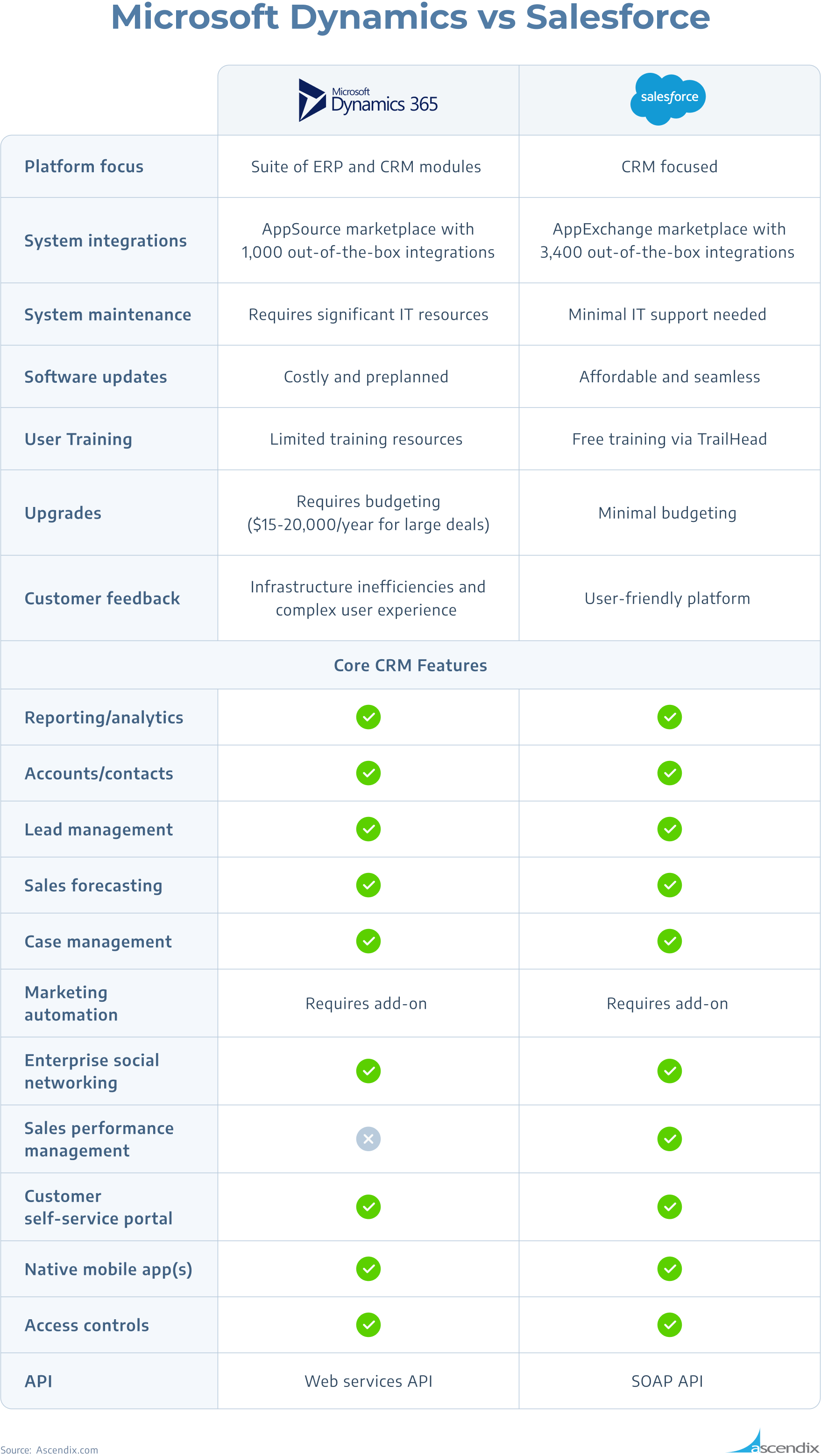
Compare the pricing models of both platforms carefully. Salesforce often comes with higher costs but extensive features. Microsoft Dynamics tends to be more cost-effective for small to mid-sized businesses. Calculate the total cost of ownership, including licenses and training. Evaluate the return on investment by measuring potential productivity gains. Choose a CRM that delivers the best value for your budget.
Credit: ascendix.com
Frequently Asked Questions
What Is Replacing Microsoft Dynamics?
Popular replacements for Microsoft Dynamics include Salesforce, HubSpot CRM, Zoho CRM, Pipedrive, and Freshsales. These offer user-friendly interfaces, flexible pricing, and advanced features. Businesses choose them for better customization, scalability, and cost efficiency compared to Microsoft Dynamics.
Why Are Companies Leaving Salesforce?
Companies leave Salesforce due to high costs, paying for unused features, complex customization, and seeking more affordable, user-friendly CRM alternatives.
Is Dynamics The Same As Salesforce?
Dynamics and Salesforce are different CRM platforms. Dynamics integrates well with Microsoft products. Salesforce offers extensive customization and third-party apps. Both serve unique business needs, so choosing depends on your specific requirements and budget.
Is There A Better Crm Than Salesforce?
Microsoft Dynamics, HubSpot, and Zoho CRM offer strong alternatives to Salesforce. They often provide lower costs and simpler features. Choose based on your business size, needs, and budget for the best fit.
Conclusion
Choosing between Salesforce CRM and Microsoft Dynamics depends on your business needs. Both offer strong features for managing customer relationships. Salesforce excels in customization and AI tools. Microsoft Dynamics provides good value with lower costs. Consider your budget, team size, and technical skills.
Try demos to see which fits best. Both systems can improve sales and customer service. Success comes from using the right tool well. Make a clear choice based on your company’s goals and resources.