Choosing the right marketing automation tool can feel overwhelming, especially when you’re weighing powerful options like HubSpot and ClickDimensions. You want a solution that fits your business needs, saves you time, and helps you connect with your customers effortlessly.
But which one will truly give you the edge? Should you go for HubSpot’s all-in-one CRM suite, or does ClickDimensions’ deep integration with Microsoft Dynamics CRM make it a better choice for you? Keep reading, because we’ll break down everything you need to know—so you can make a confident decision that drives your marketing success.
Credit: rocketcrm.co.uk
Platform Overview
Choosing the right marketing platform depends on understanding what each offers. HubSpot and ClickDimensions serve different needs but share marketing automation goals. This section compares their platforms to help clarify their strengths.
The overview covers key features and integration options. It highlights how each platform supports businesses in managing marketing, sales, and customer relationships.
Hubspot Features
HubSpot provides a full CRM platform with marketing, sales, and service tools. It includes email marketing, lead management, and social media scheduling. The platform has built-in analytics and reporting for tracking campaigns. HubSpot also offers automation workflows to nurture leads automatically. Users benefit from an easy-to-use interface suited for all skill levels. It supports landing pages, blogs, and SEO tools in one place.
Clickdimensions Features
ClickDimensions is a marketing solution built inside Microsoft Dynamics CRM. It focuses on email marketing, campaign automation, and web tracking. The platform offers forms, surveys, and event management tools. ClickDimensions provides detailed analytics tied directly to CRM data. It helps users create personalized marketing based on customer behavior. The tool is ideal for businesses already using Dynamics CRM.
Integration Ecosystems
HubSpot has a large app marketplace with hundreds of integrations. It connects easily with popular tools like Salesforce, Zoom, and Shopify. This flexibility supports diverse marketing and sales workflows. ClickDimensions integrates deeply with Microsoft Dynamics CRM and Office 365. It works best in Microsoft-centric environments with seamless data flow. Both platforms offer APIs for custom integrations but differ in ecosystem scope.

Credit: www.computan.com
Marketing Automation
Marketing automation helps businesses save time and improve efficiency. It manages marketing tasks automatically. Both HubSpot and ClickDimensions offer tools to support marketing automation. They help create and send campaigns, nurture leads, and automate workflows.
Email Campaigns
HubSpot provides easy-to-use email templates and scheduling options. It tracks email opens, clicks, and engagement in real time. ClickDimensions integrates directly with Microsoft Dynamics CRM. It offers personalized email campaigns based on customer data. Both platforms allow testing emails before sending. HubSpot has a more intuitive drag-and-drop editor. ClickDimensions focuses on deep CRM integration for targeted messaging.
Lead Nurturing
HubSpot uses behavior-based triggers to send timely messages. It scores leads automatically to prioritize sales efforts. ClickDimensions leverages CRM data to tailor lead nurturing paths. It supports multi-channel campaigns, including email and social media. Both systems help move leads down the sales funnel. HubSpot offers more visual tools for managing nurture sequences. ClickDimensions excels in linking marketing with sales data.
Workflow Automation
HubSpot’s workflow builder is user-friendly and flexible. It automates tasks like email sending, lead assignment, and follow-ups. ClickDimensions uses Dynamics workflows to automate marketing and sales processes. It supports complex rules based on CRM fields and activities. Both platforms reduce manual work and improve response times. HubSpot suits businesses wanting quick setup. ClickDimensions fits companies already using Microsoft Dynamics CRM.
Crm Capabilities
Both HubSpot and ClickDimensions offer CRM capabilities that help businesses manage customer relationships effectively. Their tools support sales teams and marketing efforts but differ in scope and design. Understanding their CRM features can guide companies to choose the best fit for their needs.
Sales Pipeline Management
HubSpot provides a clear, visual sales pipeline. Users can track deals through stages with easy drag-and-drop functionality. The system supports automation to send reminders and update deal statuses. ClickDimensions integrates with Microsoft Dynamics, offering pipeline views within that environment. It relies more on Dynamics’ native features for managing sales processes. HubSpot’s interface tends to be more user-friendly for quick updates and pipeline tracking.
Contact Management
HubSpot centralizes contact information, allowing users to store and organize data in one place. It tracks interactions such as emails, calls, and meetings automatically. ClickDimensions stores contact data within Dynamics CRM, syncing marketing and sales information. It focuses on marketing engagement history tied to each contact. HubSpot’s contact management is simpler for small to medium teams, while ClickDimensions benefits those already using Microsoft Dynamics.
Customer Data Insights
HubSpot offers built-in reports and dashboards that show sales performance and customer activity. The data helps spot trends and improve outreach. ClickDimensions provides detailed marketing analytics inside Dynamics CRM, including email tracking and campaign results. Its insights focus more on marketing effectiveness than sales metrics. Both platforms give useful data, but HubSpot delivers more straightforward reports for sales and service teams.
User Experience
User experience plays a crucial role in choosing the right marketing platform. It affects how easily users can navigate and use the tools daily. Both HubSpot and ClickDimensions offer different experiences that suit various business needs. Understanding their interface design, ease of use, and onboarding process helps in making an informed decision.
Interface Design
HubSpot features a clean, modern interface with clear menus. Its dashboard highlights key metrics and tools in an organized way. Users find it visually appealing and simple to follow. ClickDimensions integrates within Microsoft Dynamics CRM, which gives it a more traditional look. The layout can feel cluttered for new users. HubSpot’s design generally feels more intuitive and less overwhelming.
Ease Of Use
HubSpot offers straightforward navigation and user-friendly tools. It suits beginners and experienced marketers alike. Most features are easy to find and use without much training. ClickDimensions has a steeper learning curve due to its reliance on Dynamics CRM. Users must understand Dynamics to use ClickDimensions effectively. HubSpot’s ease of use often leads to quicker adoption and fewer errors.
Onboarding Process
HubSpot provides step-by-step guides and in-app tips during setup. It offers personalized onboarding support for businesses of all sizes. This helps users start quickly and avoid confusion. ClickDimensions depends on the existing Dynamics CRM setup, which can complicate onboarding. Its support focuses on integrating marketing with CRM data. HubSpot’s onboarding is generally smoother and faster for new users.
Pricing Structure
Understanding the pricing structure of HubSpot and ClickDimensions helps businesses decide which platform fits their budget. Each offers different plans and billing methods. Knowing these details can save money and avoid surprises.
Cost Comparison
HubSpot has several pricing tiers based on features and users. It starts with a free version, then moves to paid plans that increase in price. ClickDimensions charges based on the number of contacts and features used. Its pricing is less transparent but often requires a custom quote. HubSpot’s prices are fixed and clear, while ClickDimensions may vary depending on customer needs.
Hidden Fees
HubSpot may charge extra for onboarding and add-ons like extra reporting. Some advanced features require higher-tier plans. ClickDimensions may have setup fees and costs for training or support. Both platforms may require additional spending beyond the base subscription. Knowing these fees upfront avoids budget issues later.
Scalability
HubSpot’s pricing grows with your business size and feature needs. It suits small startups to large companies as plans expand. ClickDimensions works well for businesses using Microsoft Dynamics CRM and scales by adding more contacts or modules. Both platforms offer growth options, but HubSpot is easier to scale without hidden costs. Choose the one that aligns with your growth plans.
Credit: messengerbot.app
Customer Support
Integrating marketing tools with Microsoft Dynamics is crucial for smooth business operations. Both HubSpot and ClickDimensions offer ways to connect with Dynamics, but their approaches differ. Understanding these methods helps businesses choose the right platform for their needs.
Clickdimensions Native Integration
ClickDimensions is built directly inside Microsoft Dynamics. This native integration allows seamless data sharing between the two systems. Users can manage marketing campaigns, emails, and lead scoring without leaving Dynamics.
The tool uses Dynamics entities for contacts, leads, and accounts. This setup ensures real-time updates and reduces data duplication. Users benefit from a consistent user interface and familiar workflows.
Hubspot Integration Options
HubSpot does not have native integration with Microsoft Dynamics. Instead, it connects through third-party connectors or custom APIs. These solutions sync contacts, leads, and activities between HubSpot and Dynamics.
Users must set up integrations manually or use middleware services. This process may require technical knowledge or additional support. Sync frequency and data mapping depend on the chosen integration tool.
Benefits And Limitations
ClickDimensions offers a smoother experience due to native integration. It reduces setup time and supports deeper data access within Dynamics. Marketers can work inside one platform, making processes faster.
HubSpot’s integration is more flexible for businesses using multiple CRM systems. It offers advanced marketing features but needs extra effort to connect with Dynamics. Sync delays and data mismatches can occur without proper setup.
Choosing between the two depends on the business’s CRM strategy and technical resources. Native integration suits companies fully invested in Dynamics. HubSpot suits those wanting broader marketing tools and CRM flexibility.
Integration With Microsoft Dynamics
Choosing between HubSpot and ClickDimensions requires understanding their strengths and weaknesses. Both platforms offer valuable tools but differ in focus and usability. Knowing these pros and cons helps make an informed decision for your business needs.
Hubspot Pros And Cons
HubSpot provides a full CRM suite with marketing, sales, and service tools. It has an easy-to-use interface that suits beginners well. The platform offers strong automation capabilities that save time on repetitive tasks.
HubSpot’s analytics and reporting tools are detailed and help track campaign success clearly. The software integrates well with many third-party apps for expanded functionality.
On the downside, HubSpot can become costly as your contact list grows. Some advanced features require expensive upgrades. The mandatory onboarding fees add to initial expenses. Contract terms often lock users in for a full year, limiting flexibility.
HubSpot’s all-in-one design may feel restrictive for businesses needing more customization. Certain features, like custom objects, remain behind paywalls, which can frustrate users.
Clickdimensions Pros And Cons
ClickDimensions is built natively inside Microsoft Dynamics CRM. This integration suits companies already using Dynamics. It focuses on marketing automation, email campaigns, and detailed reporting.
The platform offers strong email marketing tools with good personalization options. Campaign management is straightforward for users familiar with Microsoft products. Reporting features provide clear insights into marketing results.
ClickDimensions may feel complex for users new to Dynamics CRM. Its interface is less intuitive compared to HubSpot, requiring more training. The system mainly benefits businesses already invested in Microsoft solutions.
Some users find Dynamics CRM clunky and less user-friendly. ClickDimensions lacks the broad sales and service tools that HubSpot offers. It may not suit companies wanting an all-in-one platform.
Strengths And Weaknesses
Choosing between HubSpot and ClickDimensions depends on your business needs and goals. Each platform fits different types of users and industries. Understanding their use cases and suitability helps you pick the right tool. Below, we explore which platform works best for small businesses, enterprises, and specific industries.
Best For Small Businesses
HubSpot suits small businesses well. Its user-friendly interface helps teams start quickly. The platform offers built-in CRM, email marketing, and sales tools. Small teams can manage contacts and campaigns without extra software. HubSpot’s free tier is a plus for tight budgets. ClickDimensions, tied to Microsoft Dynamics, may need more setup. It suits businesses already using Dynamics CRM. Small businesses without Dynamics might find it complex.
Best For Enterprises
ClickDimensions fits large enterprises well. It integrates deeply with Microsoft Dynamics 365. Enterprises can use advanced marketing automation linked to their CRM data. The platform handles complex workflows and large datasets. HubSpot also serves enterprises but can get costly. It offers a broad suite of marketing, sales, and service tools. Large teams benefit from HubSpot’s scalability and support options. Enterprises with Dynamics CRM often choose ClickDimensions for seamless integration.
Industry-specific Needs
ClickDimensions targets industries using Microsoft Dynamics heavily. Healthcare, finance, and manufacturing often rely on its CRM integration. The platform supports compliance and customization for these sectors. HubSpot appeals to diverse industries with flexible marketing and sales tools. It suits tech startups, education, and retail well. Both platforms offer features that can adapt to specific industry challenges. Choosing depends on your existing software and industry requirements.
Frequently Asked Questions
Is Clickup Similar To Hubspot?
ClickUp focuses on project management with basic CRM features. HubSpot offers a full CRM suite with advanced marketing, sales, and automation tools. They serve different purposes but overlap in task and pipeline management. HubSpot provides easier automation; ClickUp requires more setup and customization.
Who Is Hubspot’s Biggest Competitor?
Salesforce is HubSpot’s biggest competitor, offering a comprehensive CRM and sales platform for businesses of all sizes.
Is Clickdimensions A Crm?
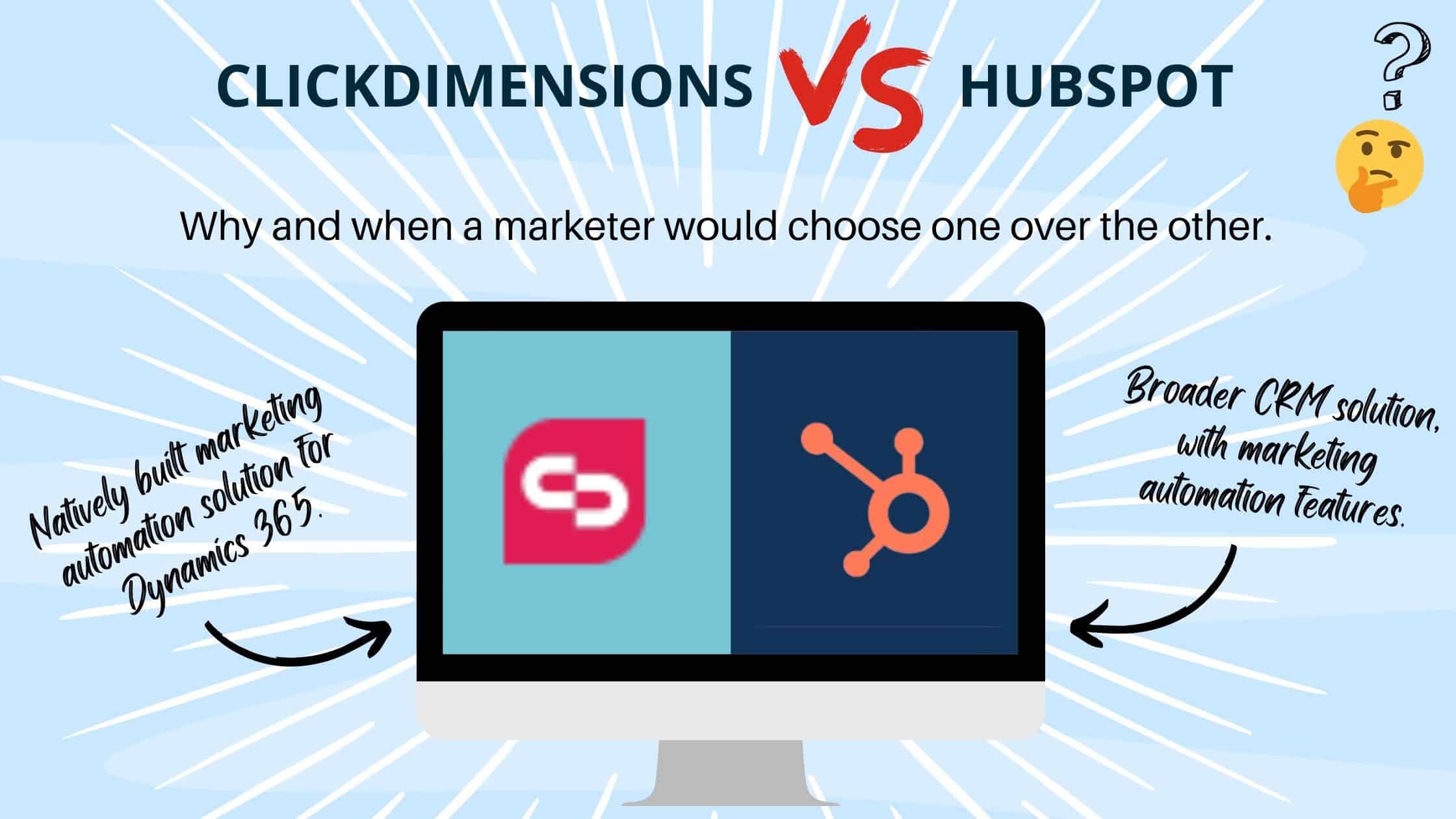
ClickDimensions is not a standalone CRM. It is a marketing automation solution built inside Microsoft Dynamics CRM.
What Are The Downsides Of Hubspot?
HubSpot can be costly as your business grows. It charges mandatory onboarding fees and enforces year-long contracts. Some essential features require expensive upgrades. The all-in-one design may limit customization and flexibility for specific needs.
Conclusion
Choosing between HubSpot and ClickDimensions depends on your business needs. HubSpot offers a complete CRM with easy automation tools. ClickDimensions works well if you use Microsoft Dynamics CRM already. Each platform has unique strengths and limitations. Think about your budget, required features, and team skills.
Testing both can help find the right fit. Both tools aim to improve marketing and sales processes effectively. Your decision should focus on which platform matches your goals best.